Categories
Commentary

Daily Brief For June 10, 2022

The daily brief is a free glimpse into the prevailing fundamental and technical drivers of U.S. equity market products. Join the 300+ that read this report daily, below!

What Happened

Overnight, equity index futures continued lower after breaking a multi-day consolidation late yesterday afternoon.

This is amid growth concerns and the European Central Bank (ECB) decision to end asset purchases this month and commit to a 25-basis-point interest rate hike at its next meeting, setting the stage for further rate hikes, potentially 50-basis-points or higher.

Ahead are updates to consumer prices (8:30 AM ET), which may shed further clarity on the path of the Federal Reserve’s policies. Later are updates to consumer sentiment and inflation expectations (10:00 AM ET), as well as the budget balance (2:00 PM ET).
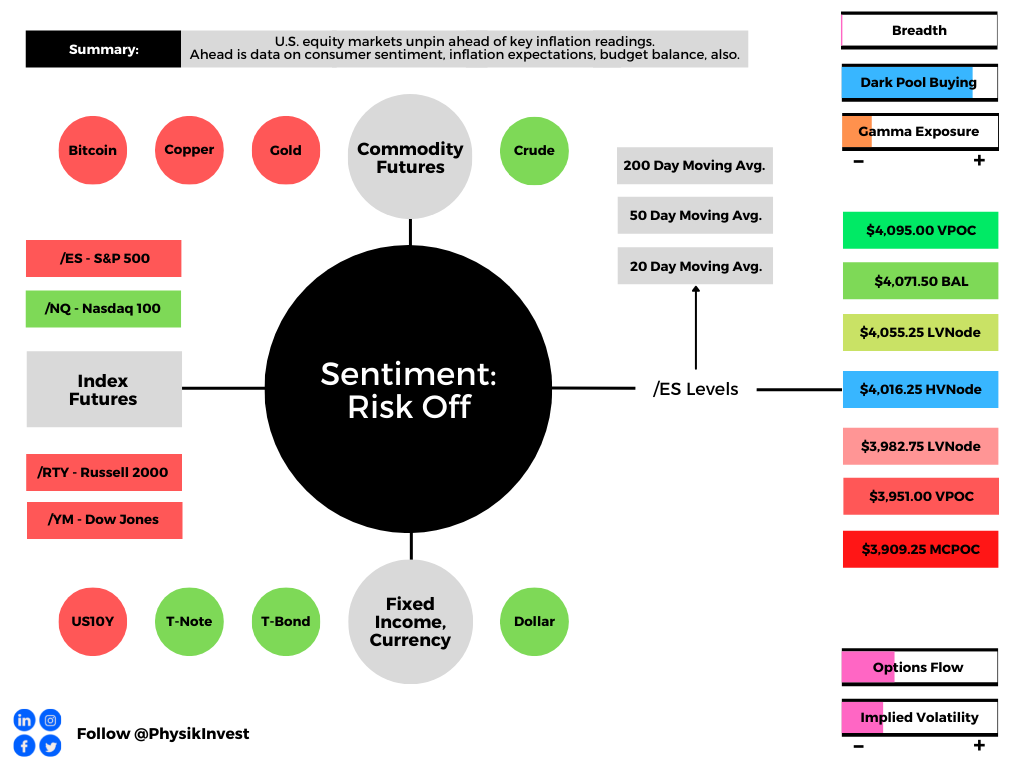
Graphic updated 6:30 AM ET. Sentiment Risk-Off if expected /ES open is below the prior day’s range. /ES levels are derived from the profile graphic at the bottom of the following section. Levels may have changed since initially quoted; click here for the latest levels. SqueezeMetrics Dark Pool Index (DIX) and Gamma (GEX) calculations are based on where the prior day’s reading falls with respect to the MAX and MIN of all occurrences available. A higher DIX is bullish. At the same time, the lower the GEX, the more (expected) volatility. Learn the implications of volatility, direction, and moneyness. SHIFT data used for S&P 500 (INDEX: SPX) options activity. Note that options flow is sorted by the call premium spent; if more positive, then more was spent on call options. Breadth reflects a reading of the prior day’s NYSE Advance/Decline indicator. VIX reflects a current reading of the CBOE Volatility Index (INDEX: VIX) from 0-100.

What To Expect

Fundamental: The CPI report is a driver of perceptions regarding future Fed activity.
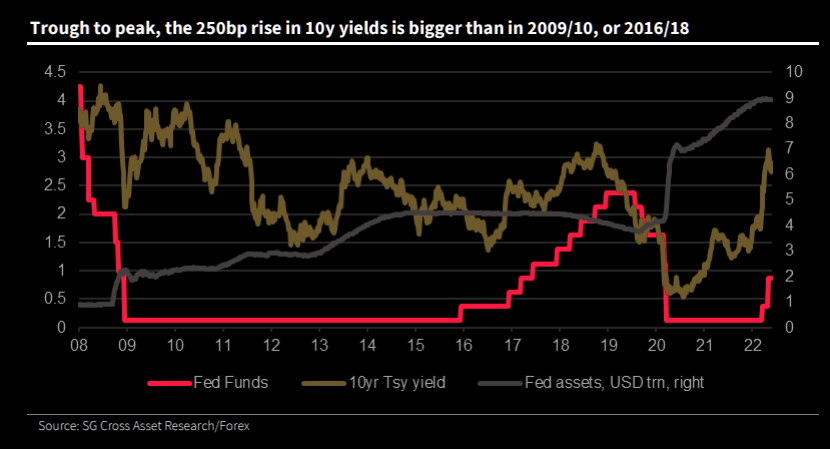
Graphic: Via Societe Generale SA (OTC: SCGLY). Taken from The Market Ear. SocGen’s Kit Juckes explains that “the Fed put its foot down on the accelerator in 2020, harder than ever before, to keep the global economy going. Now it’s put its foot on the brake, equally hard but perhaps, a little bit late. How this plays out will become clearer in the coming weeks.”

Expected is an 8.2% rise year-over-year (YoY) and 0.7% month-over-month (MoM). In April, these numbers were 8.3% and 0.3%, respectively.

Core CPI (which excludes food and energy) is expected to rise by a rate lower than in April, 5.9% YoY and 0.5% MoM, respectively.
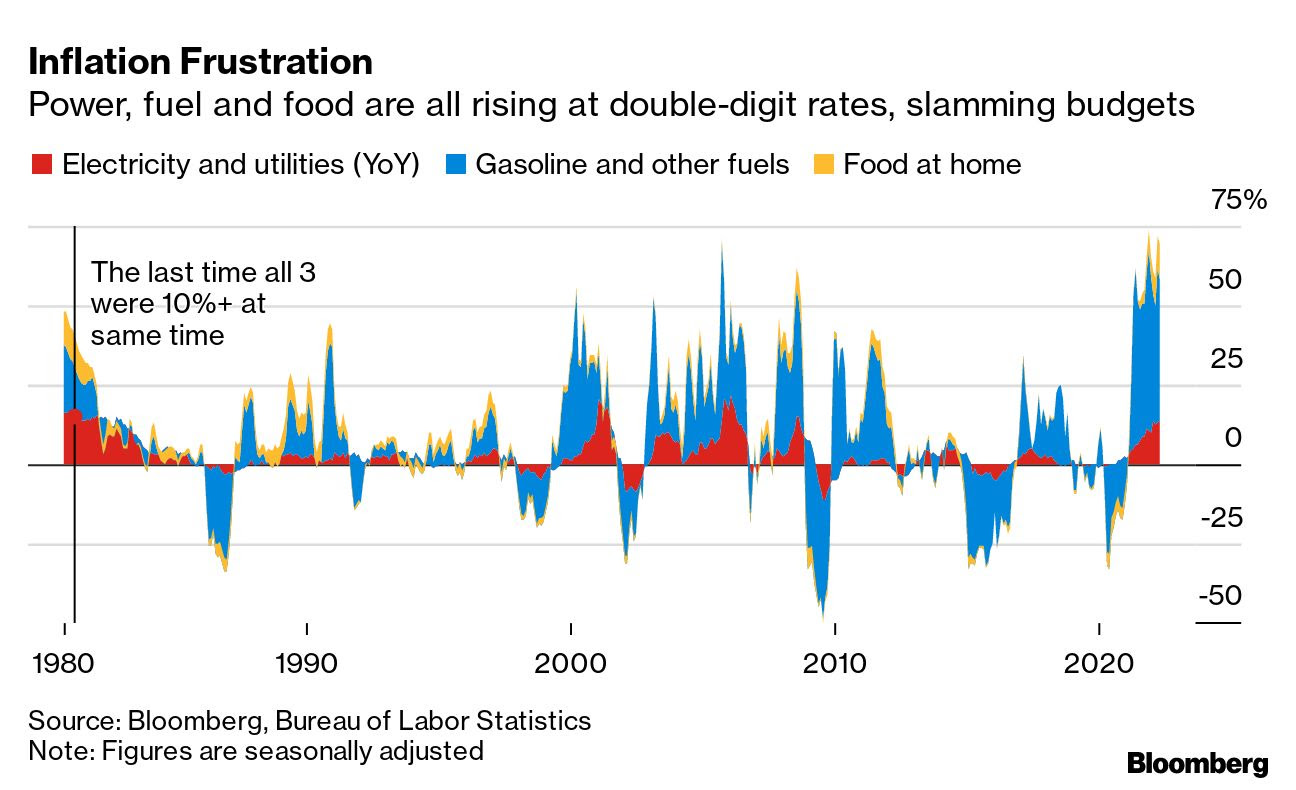
Graphic: Via Bloomberg. “For two straight months, fuel, power and grocery-store food have all been rising at double-digit annual rates—and tomorrow’s data is likely to show a further surge. Meantime, stocks fell with growth concerns in focus after the ECB moved to combat inflation.”

What matters most is the latter – core inflation – which the Fed has more control over. If lower than expected, that may warrant more appetite for risk.

“While inflation in some parts of the world [is] yet to peak, there are at least some signs emerging that we may not be too far off in terms of a turning point,” adds Khoon Goh of Australia & New Zealand Banking Group ADR (OTC: ANZBY).

Bloomberg reports semiconductor prices are now down 14% from the middle of last year. Also, the spot rate for shipping containers fell 26% while fertilizer prices are 24% below their record.

Still, the commitment to aggressive contractionary monetary policies is likely to remain. This reduction of liquidity and credit has consequences on the real economy and asset prices which rose and kept the deflationary pressures of monetary intervention at bay.

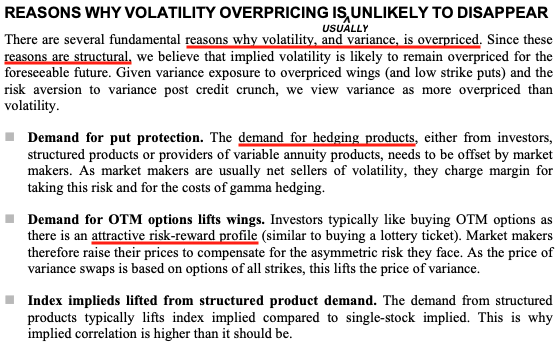
Positioning: It remains profitable to own options structures as implied (IVOL) underprices the volatility which is realized (RVOL).

This is the result of what options analytics service SqueezeMetrics suggests is an “absolute slamming” (i.e., sale of options) that’s compressing IVOL in shorter-dated tenors. 

It is “[o]nly rational to consider a bulk of them as put underwrites, because completely irrational otherwise.”

Important to note that this is in the context of next week’s large options expirations.

Into those events, typically, the frontrunning of delta hedging flows with respect to changes in time (charm), mainly, and volatility (vanna) provide an added boost. 
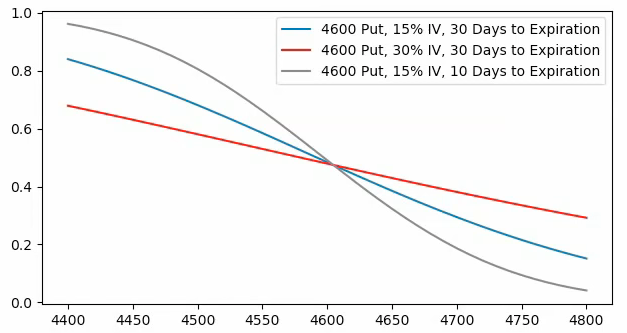
Graphic: Via SpotGamma. “SPX prices X-axis. Option delta Y-axis. When the factors of implied volatility and time change, hedging ratios change. For instance, if SPX is at $4,700.00 and IV jumps 15% (all else equal), the dealer may sell an additional 0.2 deltas to hedge their exposure to the addition of a positive 0.2 delta. The graphic is for illustrational purposes, only.”

As stated Monday, however, the marginal impact of further volatility compression, since IVOL was falling from already low levels, was likely to do less to bolster equity upside. 

A lot of the supportive action happened in the days and weeks prior, hence the comments on owning options.
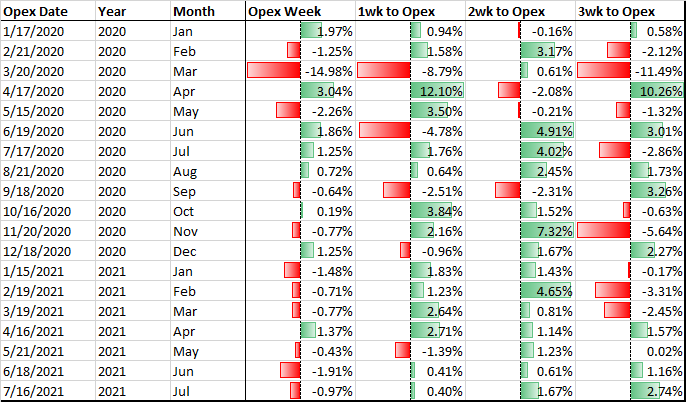
Graphic: @pat_hennessy breaks down returns for the S&P 500, categorized by the week relative to OPEX. 

Technical: As of 6:30 AM ET, Friday’s regular session (9:30 AM – 4:00 PM ET), in the S&P 500, will likely open in the lower part of a negatively skewed overnight inventory, outside of prior-range and -value, suggesting a potential for immediate directional opportunity.

In the best case, the S&P 500 trades higher; activity above the $4,016.25 HVNode puts in play the $4,055.25 LVNode. Initiative trade beyond the LVNode could reach as high as the $4,071.50 BAL and $4,095.00 VPOC, or higher.

In the worst case, the S&P 500 trades lower; activity below the $4,016.25 HVNode puts in play the $3,982.75 LVNode. Initiative trade beyond the LVNode could reach as low as the $3,951.00 VPOC and $3,909.25 MCPOC, or lower.

Click here to load today’s key levels into the web-based TradingView charting platform. Note that all levels are derived using the 65-minute timeframe. New links are produced, daily.
Graphic: 65-minute profile chart of the Micro E-mini S&P 500 Futures.

Standard Balance-Break + Gap Scenarios: A change in the market (i.e., the transition from two-time frame trade, or balance, to one-time frame trade, or trend) is occurring.

Monitor for acceptance (i.e., more than 1-hour of trade) outside of the balance area. 

Leaving value behind on a gap-fill or failing to fill a gap (i.e., remaining outside of the prior session’s range) is a go-with indicator. 

Rejection (i.e., return inside of balance) portends a move to the opposite end of the balance.

Definitions

Volume Areas: A structurally sound market will build on areas of high volume (HVNodes). Should the market trend for long periods of time, it will lack sound structure, identified as low volume areas (LVNodes). LVNodes denote directional conviction and ought to offer support on any test. 

If participants were to auction and find acceptance into areas of prior low volume (LVNodes), then future discovery ought to be volatile and quick as participants look to HVNodes for favorable entry or exit.

Point Of Control: POCs are valuable as they denote areas where two-sided trade was most prevalent in a prior day session. Participants will respond to future tests of value as they offer favorable entry and exit.

Micro Composite Point Of Control: POCs are valuable as they denote areas where two-sided trade was most prevalent over numerous day sessions. Participants will respond to future tests of value as they offer favorable entry and exit.

Volume-Weighted Average Prices (VWAPs): A metric highly regarded by chief investment officers, among other participants, for quality of trade. Additionally, liquidity algorithms are benchmarked and programmed to buy and sell around VWAPs.

About

After years of self-education, strategy development, mentorship, and trial-and-error, Renato Leonard Capelj began trading full-time and founded Physik Invest to detail his methods, research, and performance in the markets.

Capelj also develops insights around impactful options market dynamics at SpotGamma and is a Benzinga reporter.

Some of his works include conversations with ARK Invest’s Catherine Wood, investors Kevin O’Leary and John Chambers, FTX’s Sam Bankman-Fried, Kai Volatility’s Cem Karsan, The Ambrus Group’s Kris Sidial, among many others.

Disclaimer

In no way should the materials herein be construed as advice. Derivatives carry a substantial risk of loss. All content is for informational purposes only.


Categories
Commentary

Daily Brief For May 26, 2022

The daily brief is a free glimpse into the prevailing fundamental and technical drivers of U.S. equity market products. Join the 300+ that read this report daily, below!

Separately, the Daily Brief will be on pause from May 30, 2022, to June 7, 2022, due to the author’s overseas travel commitments. Apologies for the inconvenience and happy trading!

What Happened

Overnight, equity index futures were divergent, albeit nearly flat, after Wednesday’s release of minutes to the last Federal Open Market Committee (FOMC) meeting were less hawkish than expected, bolstering a small expansion of the range to the upside.

Though higher prices were held at the index level, some products like Apple Inc (NASDAQ: AAPL) were lower after issuing updates on its production. Yesterday, it was social media and advertising businesses like Snap Inc (NYSE: SNAP) that fell on forecasts for meager growth.

In other news, Sequoia Capital warned that the current environment for founders is a “crucible moment,” and there is no indication good times will return soon. 

Pursuant to that belief, we have firms like Klarna and Bolt, who just began laying off employees, preparing for slower growth and focusing on “short-term profitability.”

A chief concern, among participants at the World Economic Forum, beyond a global recession and inflation, is the potential for ongoing conflicts to cause “mass starvation” and “political instability around the world.”

Today we get updates on jobless claims, real gross domestic product, and income, as well as final sales to domestic purchasers (8:30 AM ET). Later, pending home sales (10:00 AM ET).

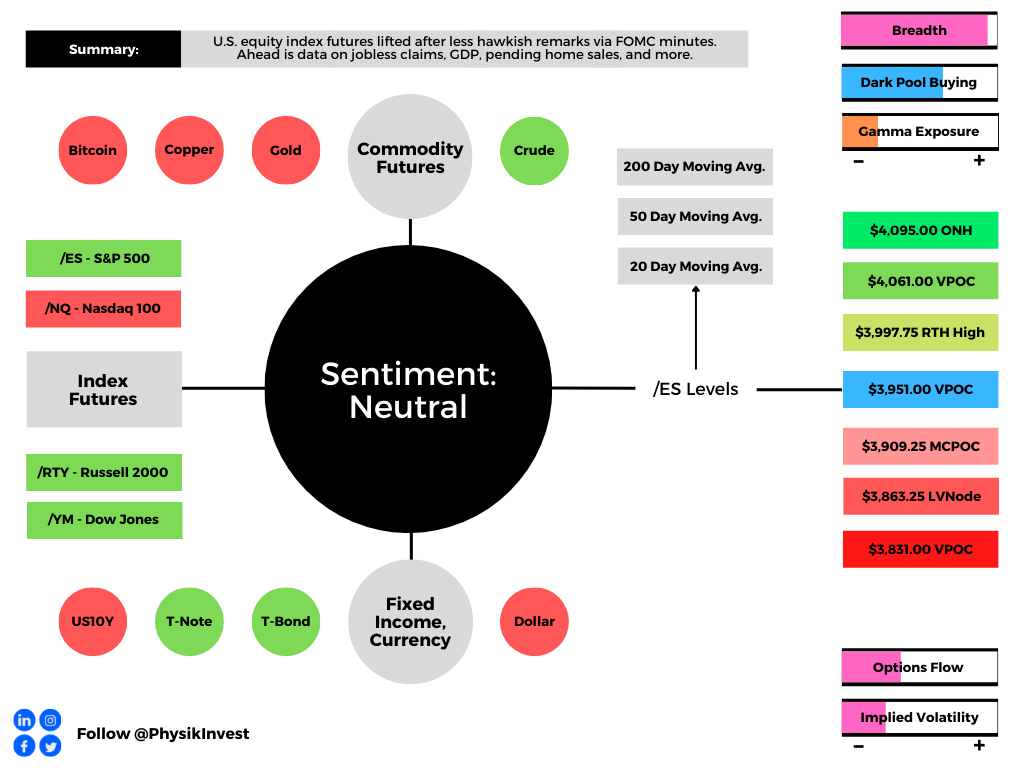
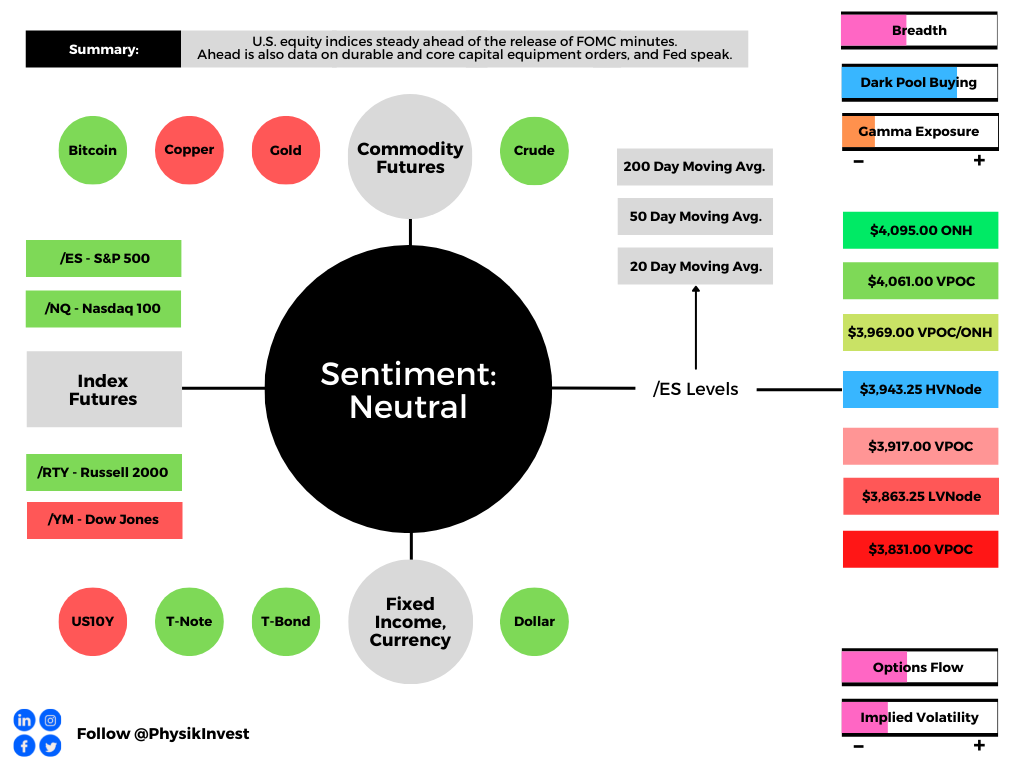
Graphic updated 6:30 AM ET. Sentiment Neutral if expected /ES open is inside of the prior day’s range. /ES levels are derived from the profile graphic at the bottom of the following section. Levels may have changed since initially quoted; click here for the latest levels. SqueezeMetrics Dark Pool Index (DIX) and Gamma (GEX) calculations are based on where the prior day’s reading falls with respect to the MAX and MIN of all occurrences available. A higher DIX is bullish. At the same time, the lower the GEX, the more (expected) volatility. Learn the implications of volatility, direction, and moneyness. SHIFT data used for S&P 500 (INDEX: SPX) options activity. Note that options flow is sorted by the call premium spent; if more positive, then more was spent on call options. Breadth reflects a reading of the prior day’s NYSE Advance/Decline indicator. VIX reflects a current reading of the CBOE Volatility Index (INDEX: VIX) from 0-100.

What To Expect

Fundamental: As was suggested could happen in Wednesday’s pre-market letter, the Federal Reserve (Fed) indicated potential policy flexibility, later this year.

Per the most recent FOMC minutes, officials are determined to achieve price stability with “50 basis-point increases in the target range … at the next couple of meetings.”

“Many participants judged that expediting the removal of policy accommodation would leave the committee well-positioned later this year to assess the effects of policy firming and the extent to which economic developments warranted policy adjustments.”

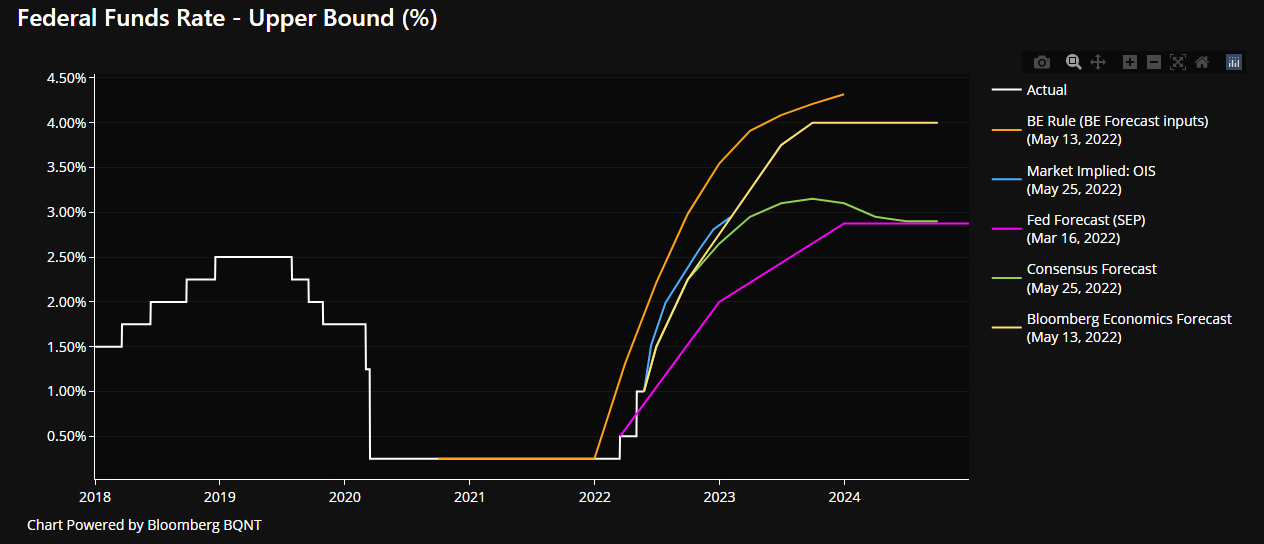
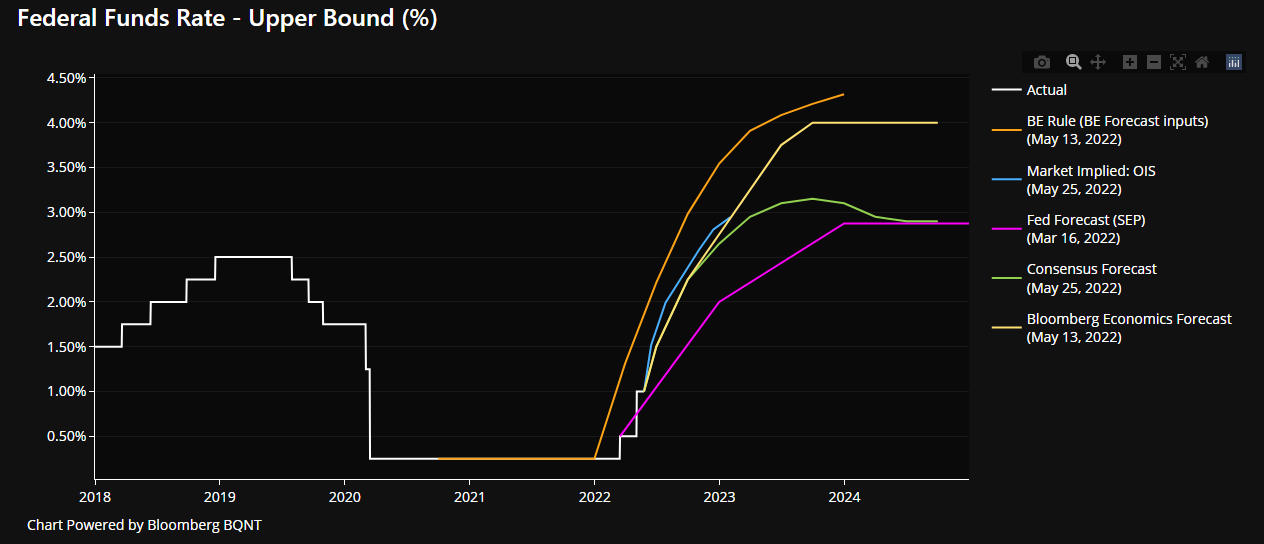
Graphic: Via Bloomberg. “​​The swaps market and consensus forecasts to Bloomberg Economics both imply considerably faster rate hikes, while Bloomberg’s own forecast is more hawkish still.”

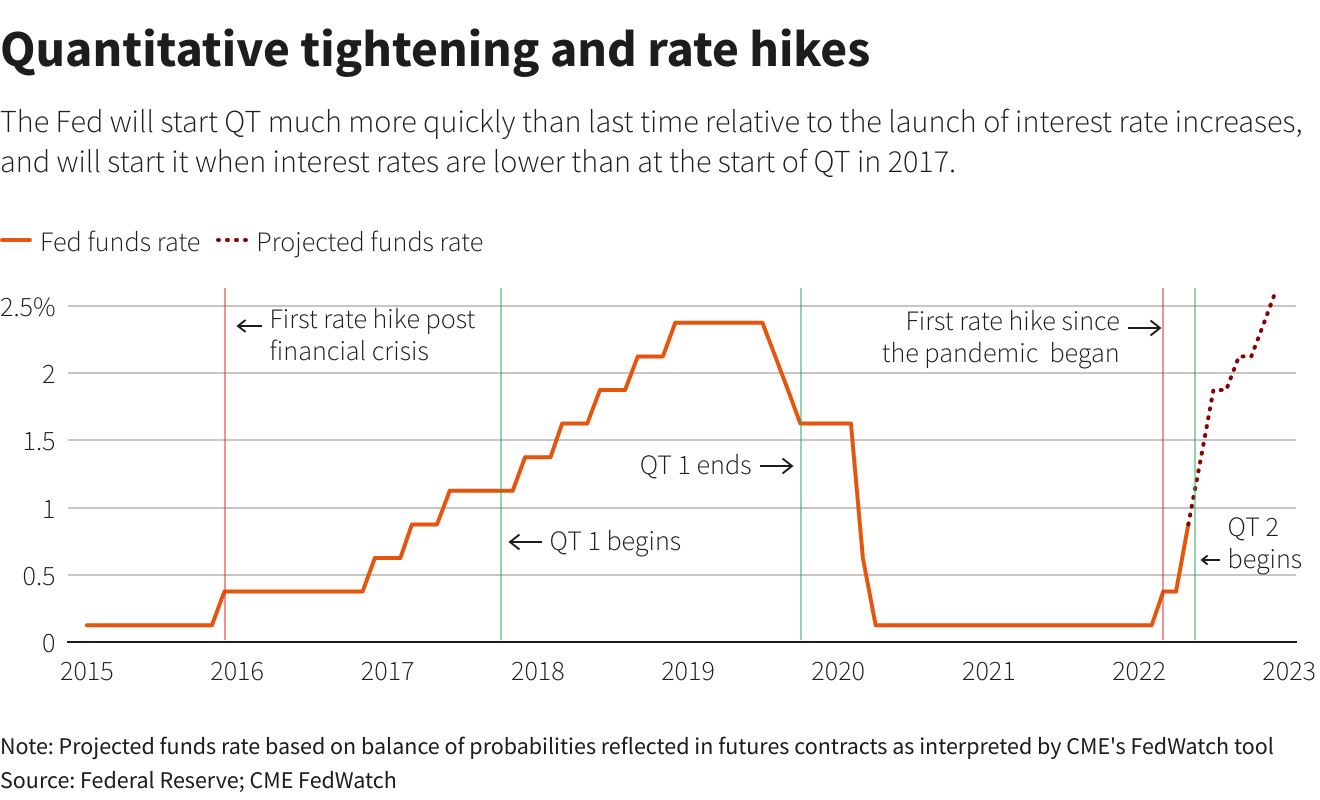
Accordingly, finalized were balance sheet reduction plans. Starting June 1, 2022, Treasury holdings will decline by $30 billion per month, rising to $60 billion per month in September. 

Mortgage-backed securities (MBS) holdings will shrink by $17.5 billion per month, ultimately rising to $35 billion, in accordance with our post-FOMC letter published May 5, 2022.

As stated, previously, with QT, central banks remove assets from their balance sheet either through outright sales or the non-reinvestment of the principal sum of maturing securities.

“QT is a direct flow of capital to capital markets” and the prospects of withdrawing this liquidity, when revealed in December’s FOMC meeting minutes, was what fed into a retreat from risk.

Graphic: Via Reuters.

Overall, the minutes left the tone unchanged and reaffirmed the Fed’s commitment to stable prices.

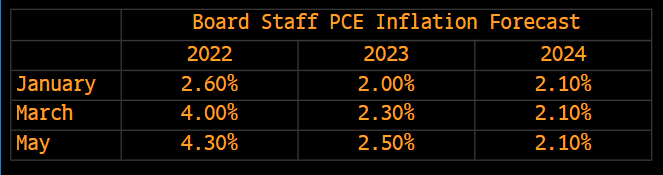
Bloomberg’s John Authers concludes, well: “If inflation should look as though it might fail to get down even to the revised forecast of 4.3% by the end of the year, there’s still a possibility that the Fed will have to be more hawkish than it currently intends, not less.”

“But at least the path until the end of summer looks clear.”

Graphic: Via Bloomberg.

Positioning: We’re carrying forward remarks from notes earlier this week as there has been a limited change in tone.

Based on current positioning, most products we monitor continue to trade in an environment that solicits more volatile hedging of put open interest and realized volatility (RVOL). This is because, naively, we look at participants as mainly owning protection to the downside. 

So, they have asymmetric (positive gamma) exposure to the downside (negative delta). On the other side, liquidity providers have a negative gamma and positive delta that they must sell into weakness and buy into strength underlying to hedge.

It is at a certain juncture, far above current prices (i.e., Zero Gamma), that the volatile effects of hedging this put open interest begin to cool. It is above these levels that participants’ exposure to calls solicits increased hedging activities which promote stability and less volatility.

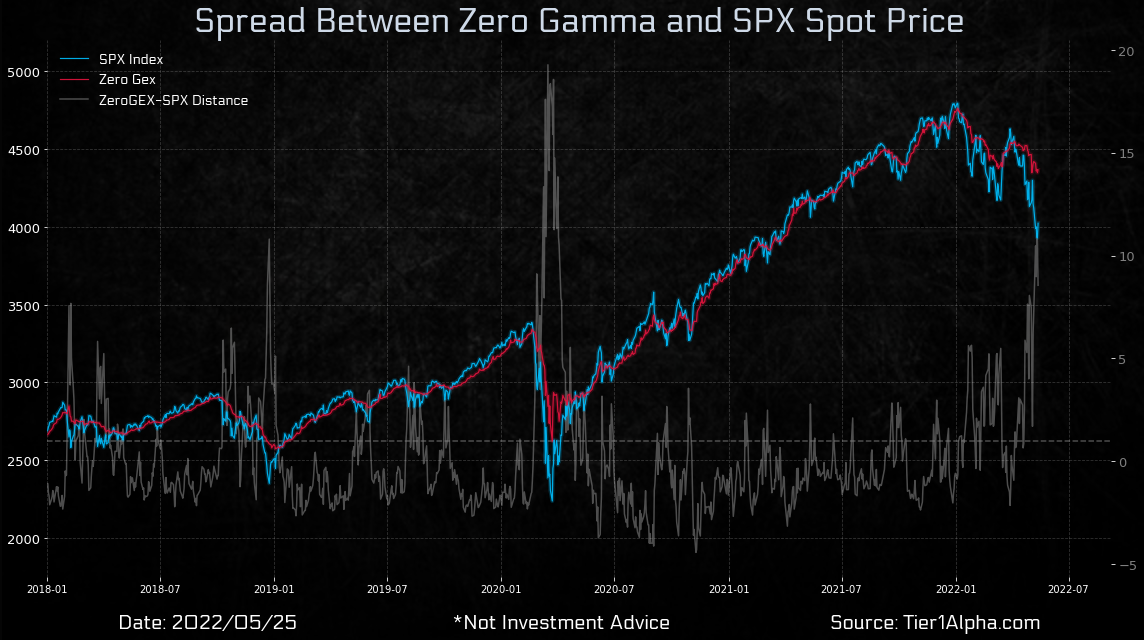
Graphic: Via Tier1Alpha. “Spot SPX is currently over -8.55% below the gamma flipping point, a distance similar to the drawdown at the end of 2018. We’ll have to see quite a reverse in trend before a substantial regime shift can take place.”

It’s because, naively, we look at participants as financing their bets on the downside with call exposure. On the other side, liquidity providers, then, have a positive gamma and delta trade they hedge by buying into weakness and selling into strength.

We’re definitely not there yet but, based on remarks in past letters (e.g., stretched market and investors bidding “skew on the call side” amid their “fear of missing on the upside”), this letter’s author continues leaning toward strategies that have little to lose in case of further implied volatility (IVOL) compression or weakness into the June FOMC and OPEX.

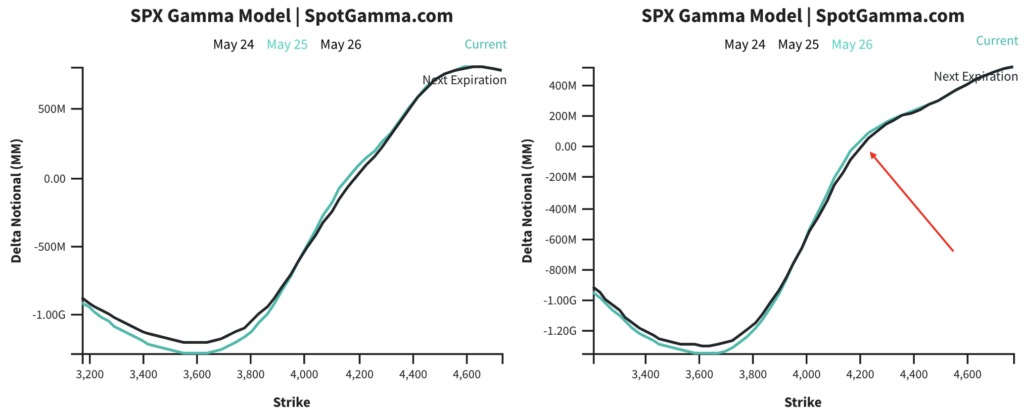
Graphic: Via SpotGamma. “[C]all positions were added [above] $4,000.00, with $4,100.00 [and] $4,200.00 adding 10k + 15k [in open interest] respectively. That’s not huge, but it was enough to kink the gamma curve in an interesting way.”

Technical: As of 6:30 AM ET, Thursday’s regular session (9:30 AM – 4:00 PM ET), in the S&P 500, will likely open in the upper part of a positively skewed overnight inventory, nearly outside of prior-range and -value, suggesting a potential for immediate directional opportunity.

In the best case, the S&P 500 trades higher; activity above the $3,951.00 VPOC puts in play the $3,997.75 RTH High. Initiative trade beyond the RTH High could reach as high as the $4,061.00 VPOC and $4,095.00 ONH, or higher.

In the worst case, the S&P 500 trades lower; activity below the $3,951.00 VPOC puts in play the $3,909.25 MCPOC. Initiative trade beyond the MCPOC could reach as low as the $3,863.25 LVNode and $3,831.00 VPOC, or lower.

Click here to load today’s key levels into the web-based TradingView charting platform. Note that all levels are derived using the 65-minute timeframe. New links are produced, daily.
Graphic: 65-minute profile chart of the Micro E-mini S&P 500 Futures.

Definitions

Overnight Highs And Lows (ONH and ONL): Typically, there is a low historical probability associated with overnight rally-highs (lows) ending the upside (downside) discovery process.

Volume Areas: A structurally sound market will build on areas of high volume (HVNodes). Should the market trend for long periods of time, it will lack sound structure, identified as low volume areas (LVNodes). LVNodes denote directional conviction and ought to offer support on any test. 

If participants were to auction and find acceptance into areas of prior low volume (LVNodes), then future discovery ought to be volatile and quick as participants look to HVNodes for favorable entry or exit.

POCs: POCs are valuable as they denote areas where two-sided trade was most prevalent in a prior day session. Participants will respond to future value tests as they offer favorable entry and exit.

About

After years of self-education, strategy development, mentorship, and trial-and-error, Renato Leonard Capelj began trading full-time and founded Physik Invest to detail his methods, research, and performance in the markets.

Capelj also develops insights around impactful options market dynamics at SpotGamma and is a Benzinga reporter.

Some of his works include conversations with ARK Invest’s Catherine Wood, investors Kevin O’Leary and John Chambers, FTX’s Sam Bankman-Fried, Kai Volatility’s Cem Karsan, The Ambrus Group’s Kris Sidial, among many others.

Disclaimer

In no way should the materials herein be construed as advice. Derivatives carry a substantial risk of loss. All content is for informational purposes only.

Categories
Commentary

Daily Brief For May 25, 2022

The daily brief is a free glimpse into the prevailing fundamental and technical drivers of U.S. equity market products. Join the 300+ that read this report daily, below!

What Happened

Overnight, equity index futures were steady alongside commodities and bonds. This is ahead of the release of minutes from a Federal Reserve (Fed) policy meeting. 

In the news were advertising and social media firms. Snap Inc (NYSE: SNAP) warned of slower growth and deterioration in the macro-environment. Its peers Meta Platforms Inc (NASDAQ: FB), Alphabet Inc (NASDAQ: GOOGL), and Twitter Inc (NYSE: TWTR) also saw weakness.

China’s COVID Zero commitment likely nudges it off a path to achieve economic targets “by a large margin for the first time ever,” as Bloomberg explains

This is as China and Russia have conducted one of their largest joint air drills “to send their own political, economic and military message to the international community,” much of which is at Davos, Switzerland doing thought exercises.

In a recent podcast, Pippa Malmgren, who is a former White House adviser and economist, well said, particularly in reference to some of the tension abroad, that “autocracy is not working well,” and “[y]ou go to war because … you have a domestic objective.”

Thought it was interesting. Give it a listen, here.

And, finally, Michael Burry of the “Big Short” sent a cryptic tweet alluding to what is likely the risk of another financial collapse. 

Moreover, ahead is data on durable goods and core capital equipment orders (8:30 AM ET). Later, the Fed publishes the minutes of its last policy meeting (2:00 PM ET).

Graphic updated 6:10 AM ET. Sentiment Neutral if expected /ES open is inside of the prior day’s range. /ES levels are derived from the profile graphic at the bottom of the following section. Levels may have changed since initially quoted; click here for the latest levels. SqueezeMetrics Dark Pool Index (DIX) and Gamma (GEX) calculations are based on where the prior day’s reading falls with respect to the MAX and MIN of all occurrences available. A higher DIX is bullish. At the same time, the lower the GEX, the more (expected) volatility. Learn the implications of volatility, direction, and moneyness. SHIFT data used for S&P 500 (INDEX: SPX) options activity. Note that options flow is sorted by the call premium spent; if more positive, then more was spent on call options. Breadth reflects a reading of the prior day’s NYSE Advance/Decline indicator. VIX reflects a current reading of the CBOE Volatility Index (INDEX: VIX) from 0-100.

What To Expect

Fundamental: The Fed will issue policy meeting minutes that may provide clarity with respect to its intent to hike and reduce the size of its balance sheet.

In focus, per ex-Fed insider Ellen Meade, is “the rate path, the expected economic conditions, and what policymakers want to see from the data before they slow the pace of tightening.”

“The minutes may tell us they see the tightening in conditions this time around as greater than in earlier cycles. If that’s the case, then they may judge that they don’t need to raise the funds rate by as much this time around.”

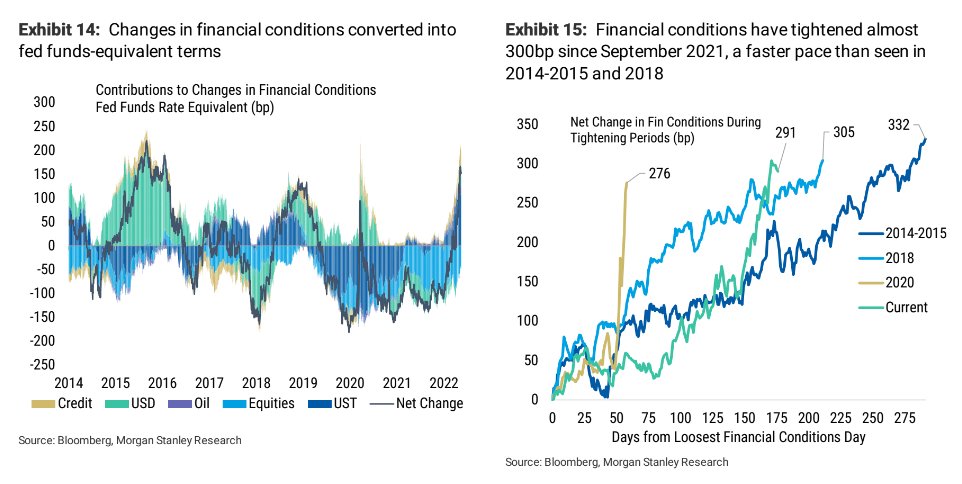
Graphic: Via Morgan Stanley (NYSE: MS) research.

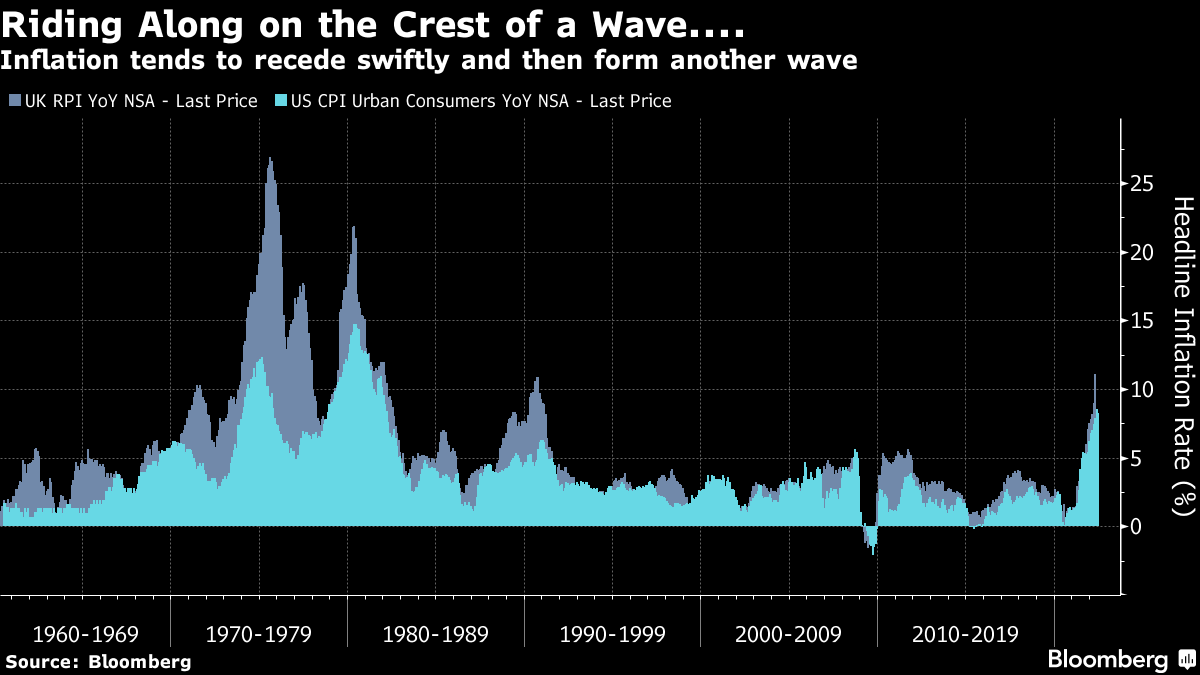
John Authers notes, however, that “inflation tends to move in waves” and it doesn’t, usually, “plateau and stay there.”

Graphic: Via Bloomberg.

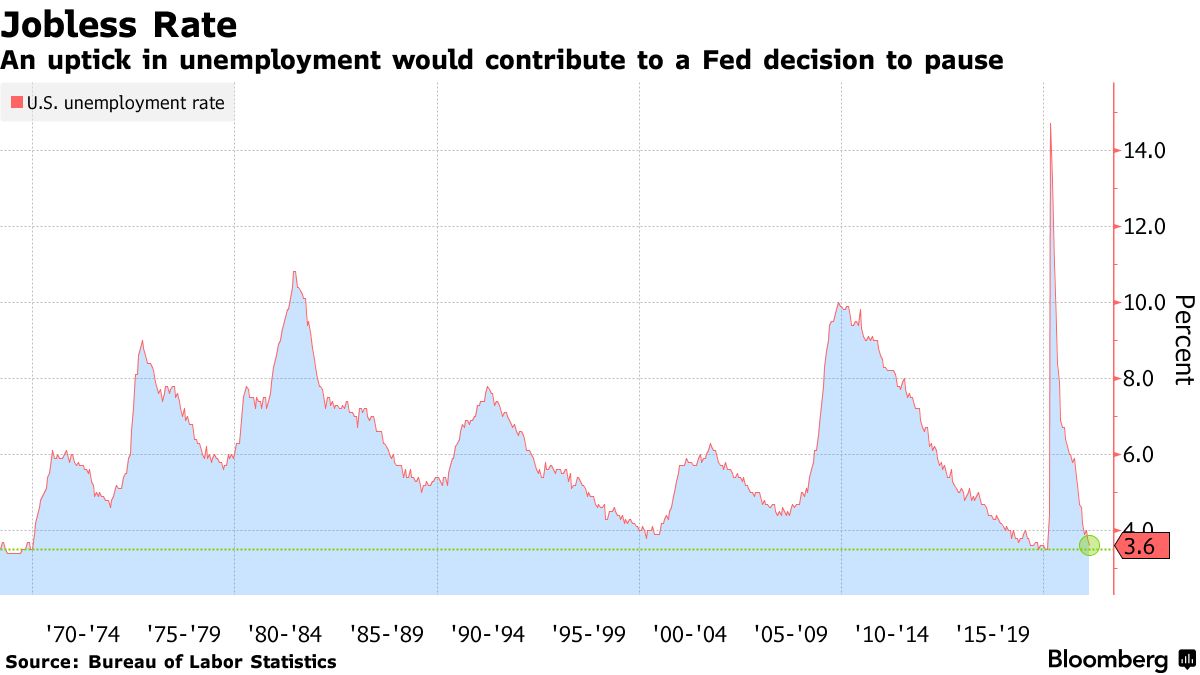
“That suggests that even though the focus is already shifting to whether there is evidence of a growth slowdown,” he added, in a statement echoed by Meade who is betting on slower “GDP growth, below its longer-run rate, and a rise in the unemployment rate, perhaps to its longer-run median rate or slightly above.”

Graphic: Via Bloomberg.

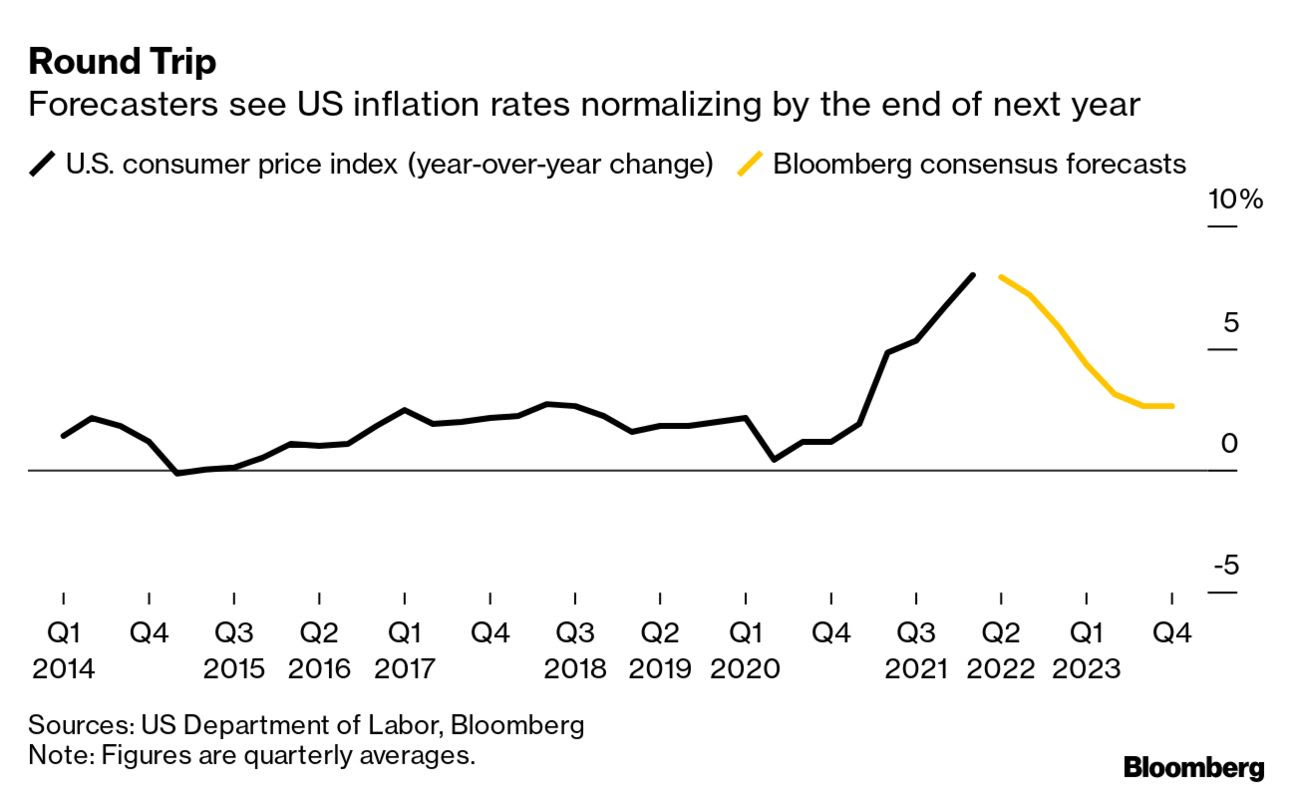
Pursuant to those last remarks, the Fed’s Raphael Bostic is already floating a pause to rate hikes near September if inflation falls more than expected over the summer.

As Diane Swonk of Grant Thorton explains, “Policy works with a lag. The Fed wants to catch up but not outrun the market in its effort to tighten credit market conditions.”

Graphic: Via Bloomberg.

Futures First analyst Rishi Mishra, who is also the author of the “On Another Note” newsletter, suggests the Federal Open Market Committee may, rather, hone in on monthly changes with annual inflation still elevated.

“This brings down inflation expectations into a range where the Fed feels comfortable about de-anchoring risks,” Mishra said.

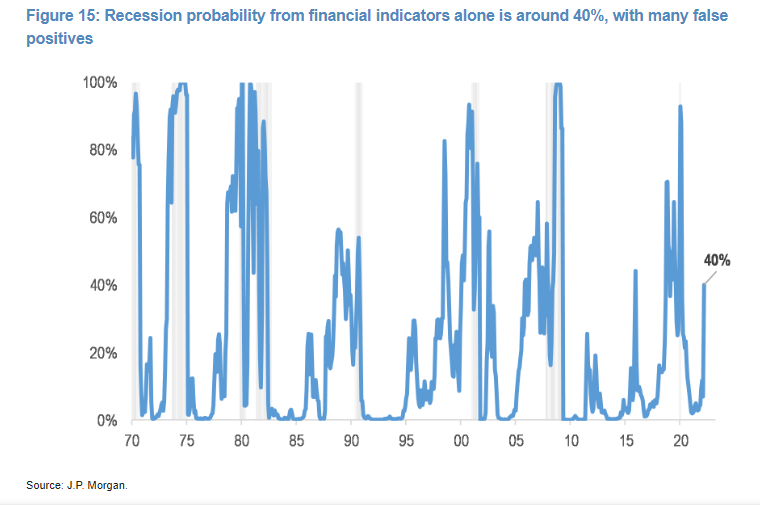
Graphic: Via JPMorgan Chase & Co (NYSE: JPM). Taken from Bloomberg. Though, potentially, “premature,” JPM’s model tracking the S&P 500, credit spreads and yield curve implies a 40% chance of a recession.

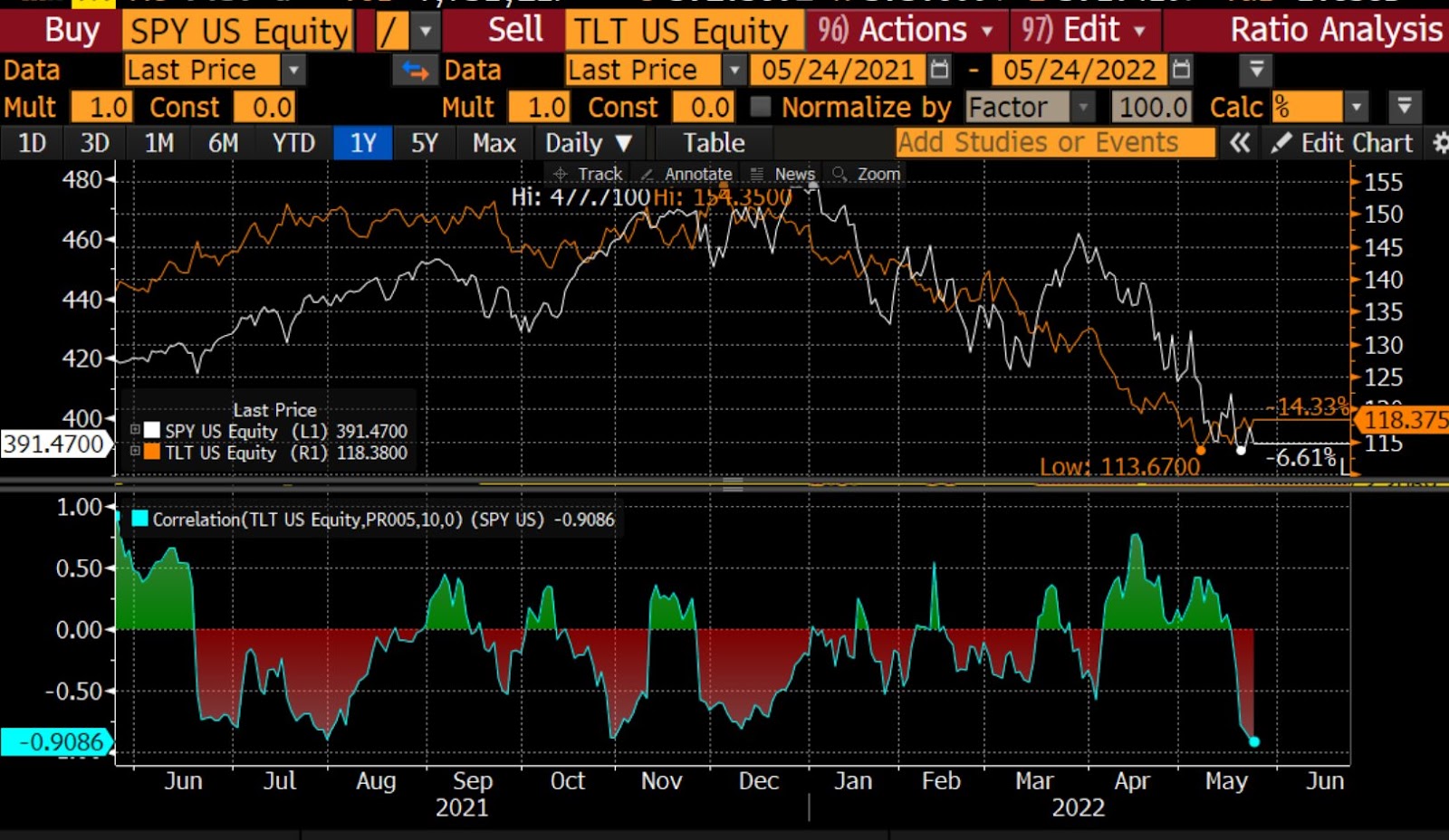
JPM’s Marko Kolanovic adds: “We have gone from a situation where both stocks and bonds were sold on the back of de-leveraging, to a situation where bonds rallied as stocks fell, nudging stock/bond correlations toward a more normal (negative) level.”

“We do indeed think this is where things could be gradually heading, but we acknowledge this is not likely to play out in a linear way.”

Graphic: Via @MrBlonde_macro. “Stock/bond correlation negative over the last 10 days. Some ‘normalization’ in cross-market relationships can be a source of relief.” The flip happened with 10-year yields at or above 3%.

Positioning: In yesterday’s in-depth write-up, we talked about the underperformance of implied volatility (IVOL), relative to that which is realized (RVOL).

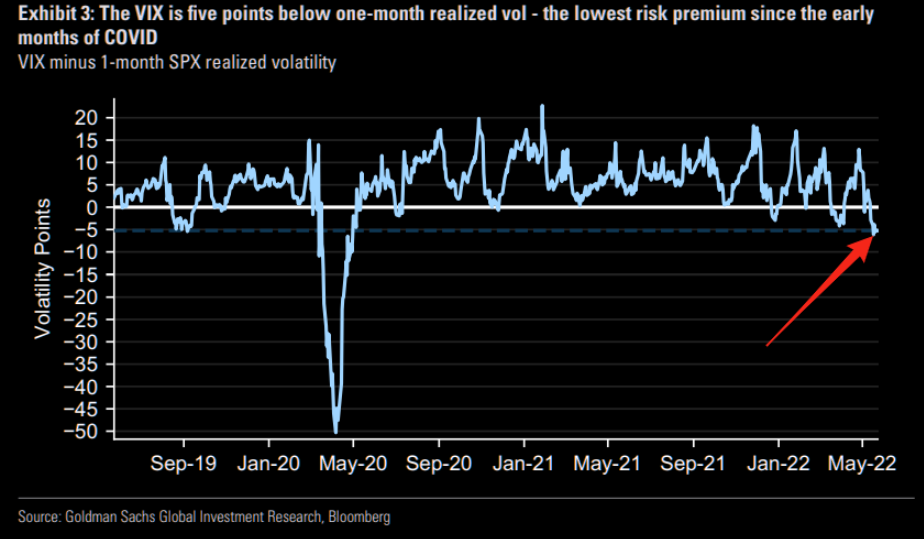
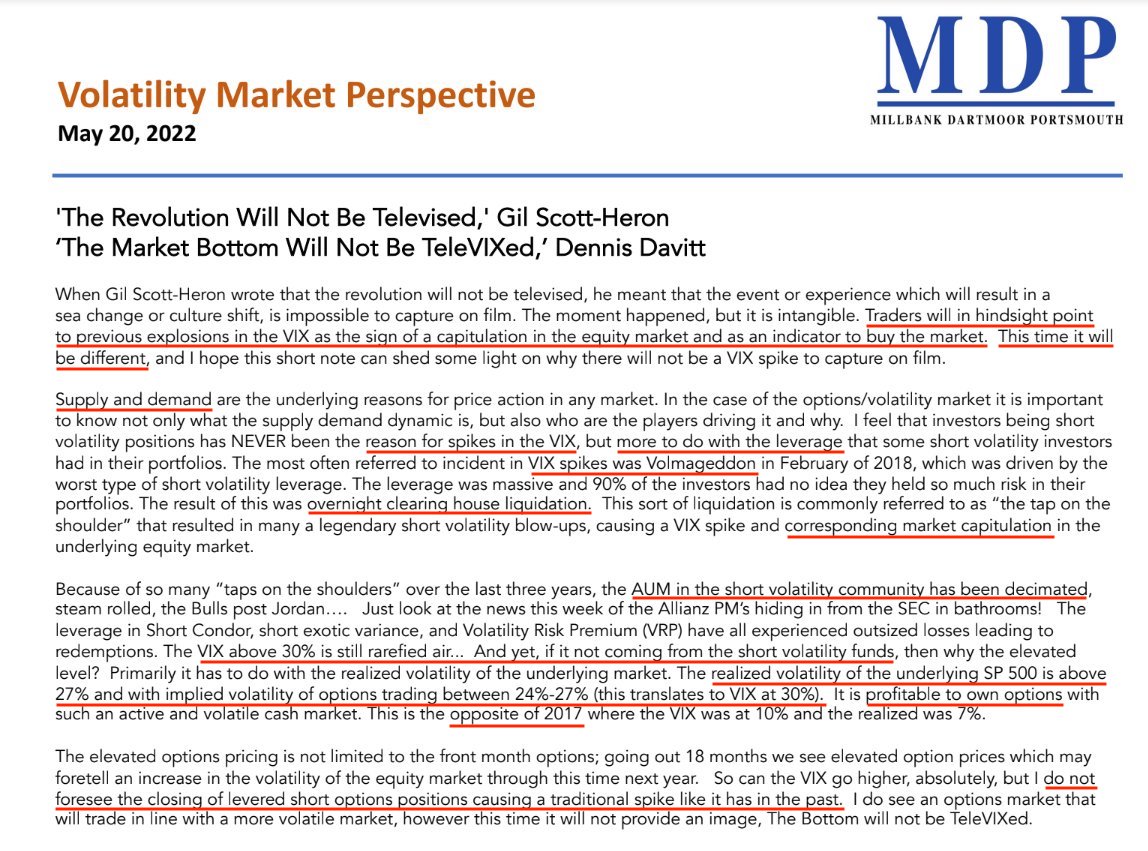
Dennis Davitt of Millbank Dartmoor Portsmouth had explained that the “RVOL of the underlying S&P 500 is above 27% … with IVOL of options trading between 24%-27%,” which translates to a VIX at 30%.

Graphic: Via Goldman Sachs Group Inc (NYSE: GS). Taken from The Market Ear.

So, essentially, it makes more sense to have exposure to underlying markets, synthetically (i.e., own options). 

This, though, merits a bit more clarification (as I do not want it to be construed as if I was buying, systemically, bets on the downside). The opposite, actually.

Moreover, this was stated in the context of a market that is “(1) stretched and (2) near a critical inflection which we see at $3,700.00 SPX,” per SpotGamma. Separately, investors are bidding “skew on the call side” amid their “fear of missing on the upside.”

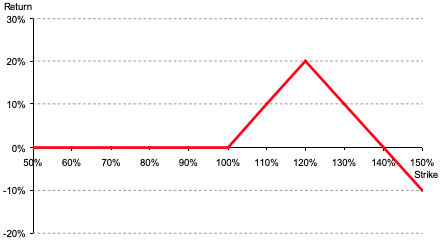
That’s when it makes sense to buy closer to at-the-money (ATM) and sell farther from ATM, or out-of-the-money (OTM). For instance, a margin intensive but low cost call +1 [ATM] x -2 [OTM] ratio spread

Note, however, that width and timing are everything. Too much time or too narrow may result in asymmetric losses when the demand for upside bets further out in price and time bids the skew that you’re short, relative to the at-the-money volatility you own. 

I’m willing to talk through this via email, if interested. Ping me at renato@physikinvest.com. I’m mindful that if I do post actual trade ideas, people may take them without knowing how to size and manage them, accordingly. Big yikes!

Goldman validates this thesis: “Even though the VIX’s reaction to recent spot downside has been mild, its high starting point leaves vol high overall, and we like strategies with a short volatility bias, including put selling and 1×2 call spread overlays.”

Graphic: Via Banco Santander SA (NYSE: SAN) research, the return profile, at expiry, of a classic 1×2 (long 1, short 2 further away) ratio spread.

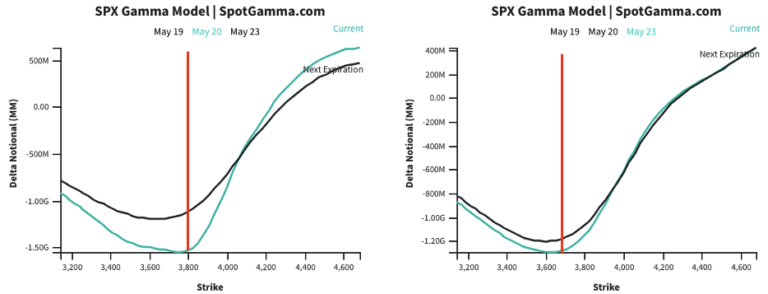
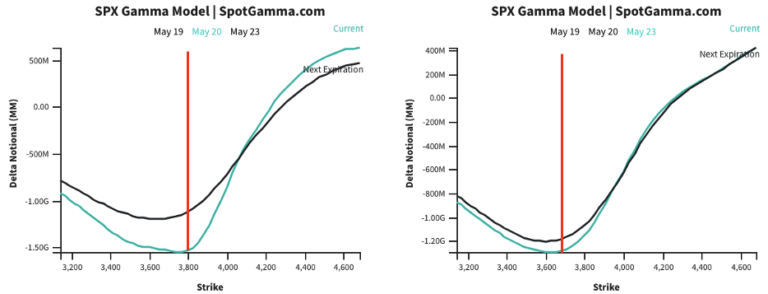
Further, though SpotGamma assigns an edge to lower prices until the June FOMC and OPEX, “markets (which are already ‘fully loaded’ with puts) [are likely] pressured by liquidity providers’ hedging [at most] down to $3,700.00,” the area where that added pressure from hedging cools.

Graphic: Via SpotGamma.

Technical: As of 6:15 AM ET, Wednesday’s regular session (9:30 AM – 4:00 PM ET), in the S&P 500, will likely open in the lower part of a balanced overnight inventory, just inside of prior-range and -value, suggesting a limited potential for immediate directional opportunity.

In the best case, the S&P 500 trades higher; activity above the $3,943.25 HVNode puts in play the $3,969.00 ONH. Initiative trade beyond the ONH could reach as high as the $4,061.00 VPOC and $4,095.00 ONH, or higher.

In the worst case, the S&P 500 trades lower; activity below the $3,943.25 HVNode puts in play the $3,917.00 VPOC. Initiative trade beyond the VPOC could reach as low as the $3,863.25 LVNode and $3,831.00 VPOC, or lower.

Click here to load today’s key levels into the web-based TradingView charting platform. Note that all levels are derived using the 65-minute timeframe. New links are produced, daily.
Graphic: 65-minute profile chart of the Micro E-mini S&P 500 Futures.

Considerations: Push-and-pull, as well as responsiveness near key-technical areas (discernable visually on a chart), suggests technically-driven traders with shorter time horizons are very active.

Such traders often lack the wherewithal to defend retests.

Large participants (who often move by committee) seldom respond to key technical inflections. It is their activity that often results in poor reliability of our technical levels.

Sometimes, the better trade is to wait for the larger participants’ entry and use the expansion of the range as a confirmation of a new trend.

Catalysts to consider include the release of Federal Open Market Committee (FOMC) minutes, Wednesday.

Definitions

Overnight Highs And Lows (ONH and ONL): Typically, there is a low historical probability associated with overnight rally-highs (lows) ending the upside (downside) discovery process.

Volume Areas: A structurally sound market will build on areas of high volume (HVNodes). Should the market trend for long periods of time, it will lack sound structure, identified as low volume areas (LVNodes). LVNodes denote directional conviction and ought to offer support on any test. 

If participants were to auction and find acceptance into areas of prior low volume (LVNodes), then future discovery ought to be volatile and quick as participants look to HVNodes for favorable entry or exit.

POCs: POCs are valuable as they denote areas where two-sided trade was most prevalent in a prior day session. Participants will respond to future value tests as they offer favorable entry and exit.

About

After years of self-education, strategy development, mentorship, and trial-and-error, Renato Leonard Capelj began trading full-time and founded Physik Invest to detail his methods, research, and performance in the markets.

Capelj also develops insights around impactful options market dynamics at SpotGamma and is a Benzinga reporter.

Some of his works include conversations with ARK Invest’s Catherine Wood, investors Kevin O’Leary and John Chambers, FTX’s Sam Bankman-Fried, Kai Volatility’s Cem Karsan, The Ambrus Group’s Kris Sidial, among many others.

Disclaimer

In no way should the materials herein be construed as advice. Derivatives carry a substantial risk of loss. All content is for informational purposes only.
Categories
Commentary

Daily Brief For May 24, 2022

The daily brief is a free glimpse into the prevailing fundamental and technical drivers of U.S. equity market products. Join the 300+ that read this report daily, below!

What Happened

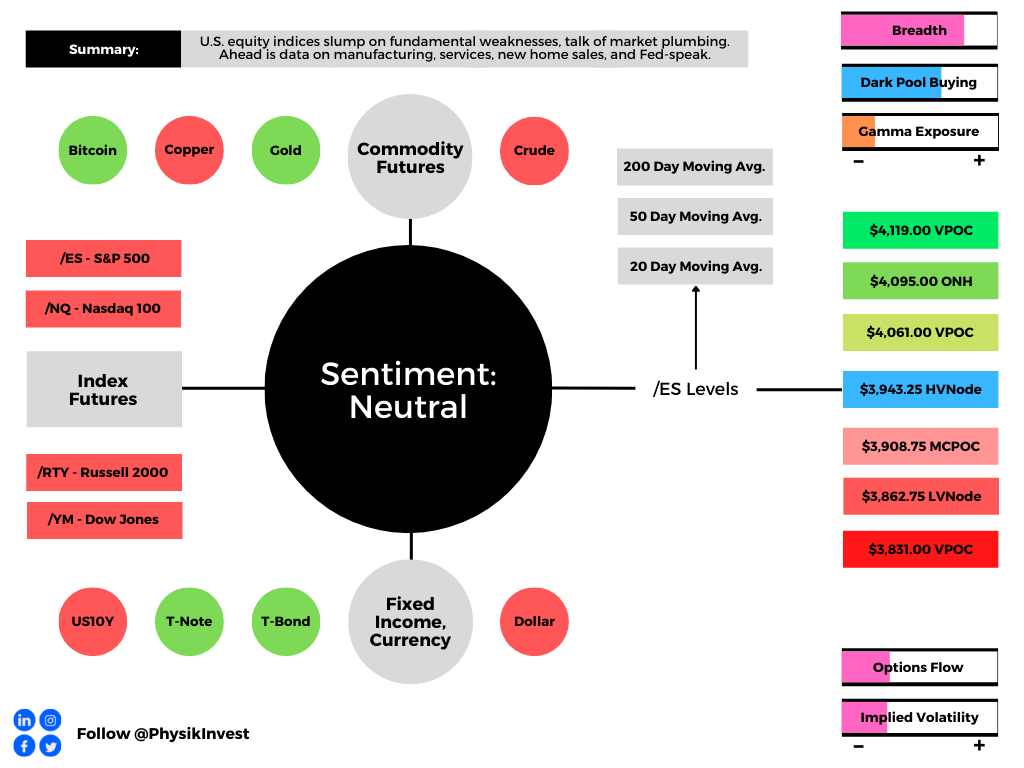
Overnight, equity index futures softened after what appeared to be continued covering of shorts into Monday’s close. Commodities were mixed, bonds higher, and implied volatility higher.

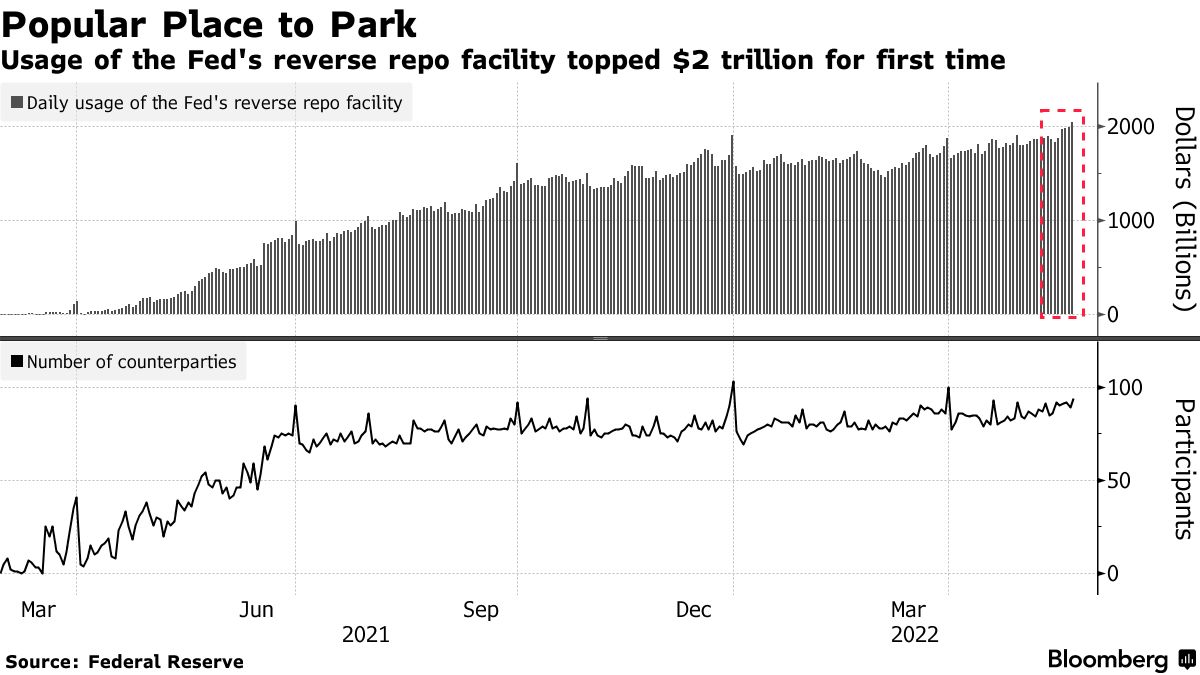
In the news the amount of money parked at major Federal Reserve facilities climbed to another all-time high, passing $2 trillion. JPMorgan Chase & Co’s (NYSE: JPM) CEO Jamie Dimon said recently that the Fed must do quantitative tightening since there’s too much liquidity in the pipes.

Adding, the Fed’s Raphael Bostic said policymakers may hike rates by 0.50 basis points after their next two meetings before pausing in September to allow for observation. This is as banks UBS Group AG (NYSE: UBS) and JPMorgan Chase & Co cut their expectations for growth here and abroad.

Ahead is data on S&P Global Inc (NYSE: SPGI) manufacturing and services (9:45 AM ET). Later, participants get updates on new home sales (10:00 AM ET) and Fed-speak by Chair Jerome Powell. Later this week, on Wednesday, participants will receive minutes of the Fed’s most recent meeting which may provide further insight into the central bank’s intent to tighten.

Graphic updated 6:15 AM ET. Sentiment Neutral if expected /ES open is inside of the prior day’s range. /ES levels are derived from the profile graphic at the bottom of the following section. Levels may have changed since initially quoted; click here for the latest levels. SqueezeMetrics Dark Pool Index (DIX) and Gamma (GEX) calculations are based on where the prior day’s reading falls with respect to the MAX and MIN of all occurrences available. A higher DIX is bullish. At the same time, the lower the GEX, the more (expected) volatility. Learn the implications of volatility, direction, and moneyness. SHIFT data used for S&P 500 (INDEX: SPX) options activity. Note that options flow is sorted by the call premium spent; if more positive, then more was spent on call options. Breadth reflects a reading of the prior day’s NYSE Advance/Decline indicator. VIX reflects a current reading of the CBOE Volatility Index (INDEX: VIX) from 0-100.

What To Expect

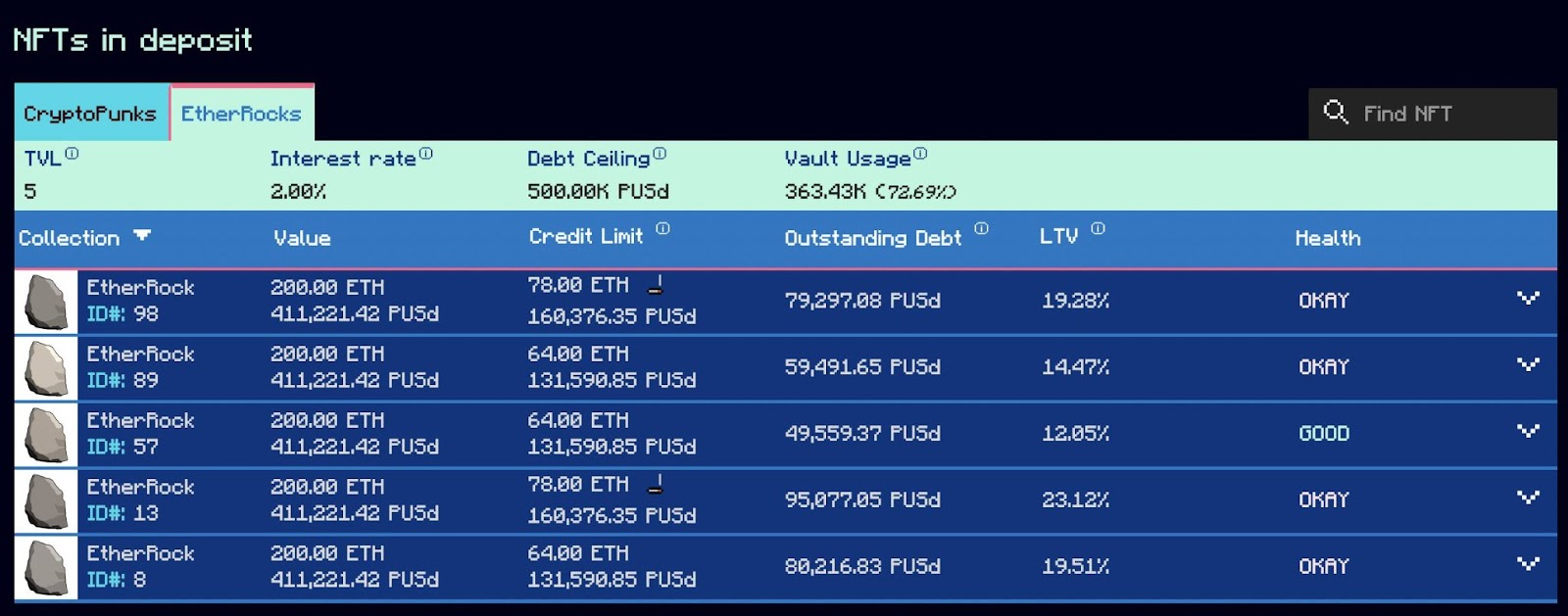
Fundamental: So long as market participants are using JPEG images of rocks as collateral for debt, it is likely we have not reached a more permanent bottom in the broad market. 

Kidding – just trying to lighten the mood, haha! Sorry to my crypto friends! 

For real, though, maybe the destruction of that market is what we’re to watch for.
Graphic: Via Corey Hoffstein. “You call it ‘tulip mania,’ but I’m gonna need to see evidence that the Dutch set up lending markets where they used paintings of rocks as collateral.”

Support of market excesses was liquidity in the financial system, a lot of which is now piling into the Fed’s overnight reverse repurchase agreement facility (RRPs).

Graphic: Via Bloomberg. Per the Federal Reserve Bank of New York: “A reverse repurchase agreement conducted by the Desk, also called a “reverse repo” or “RRP,” is a transaction in which the Desk sells a security to an eligible counterparty with an agreement to repurchase that same security at a specified price at a specific time in the future. The difference between the sale price and the repurchase price, together with the length of time between the sale and purchase, implies a rate of interest paid by the Federal Reserve on the transaction.”

Since the start of the year, however, the anticipation and pricing in of the removal of some of this liquidity have fed into market weaknesses.

Per the Damped Spring Advisors’ Andy Constan, the “Fed will reduce their balance sheet by choosing not to reinvest the proceeds of maturity payments of existing holdings back into the market. The U.S. Treasury will need to find new buyers for the bonds it issues.”

Please read our Daily Brief For May 5, 2022, here, for more on the Federal Reserve’s updates.

On June 1, the Fed will start the process of balance sheet reduction at $47.5 billion ($30B UST and $17.5B MBS) a month for the first three months. This will increase to $95 billion ($60B UST and $35B MBS), after, about double the maximum pace of $50 billion a month in 2017-2019.

Constan adds: “In June, that supply those markets will need to absorb will be $50 billion USD and will grow to $95 billion (of which some will be outright sales of mortgages by the Fed).”

Accordingly, “[j]ust as USD strength occurred as global investors chased U.S. assets, as the U.S. economy led the global economy out of the Covid chasm, the next leg of asset returns is more likely in countries that remain relatively easy and where the economy is still lagging.”

Goldman Sachs Group Inc’s (NYSE: GS) Vickie Chang notes: “Using history as a guide, in order for equities to come off their recent lows (and stop declining), this kind of monetary-tightening induced contraction is most likely to end when the Fed itself shifts.” 

“It may be that the market needs to see signs of the inflation deceleration that our US economists expect in the second half of the year in order to see sustained relief.”

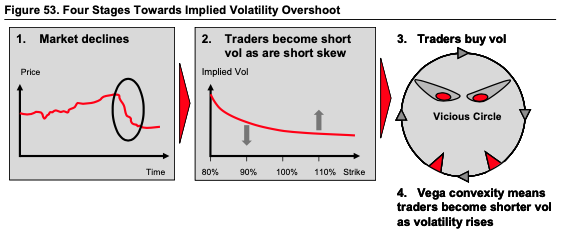
Positioning: Pursuant to comments established last week, Dennis Davitt of Millbank Dartmoor Portsmouth explains that the “realized volatility of the underlying S&P 500 is above 27% … with implied volatility of options trading between 24%-27%,” which translates to a VIX at 30%.

“It is profitable to own options with such an active and volatile cash market. This is the opposite of 2017 where the VIX was at 10% and the realized was 7%,” a trade that leverage poured into and resulted in the spectacular short-volatility ‘Volmageddon’ blow-up in February of 2018.

Graphic: Via Banco Santander SA (NYSE: SAN) research.

What does this mean?

Davitt concludes that “18 months” out there are “elevated option prices which may foretell an increase in the volatility of the equity market through this time next year.”

Though the Cboe Volatility Index (INDEX: VIX) may print higher, it is likely that it does not spike and point to an immediate market bottom, all else equal, like it has in the very near past.

Graphic: Via Millbank Dartmoor Portsmouth.

How to play?

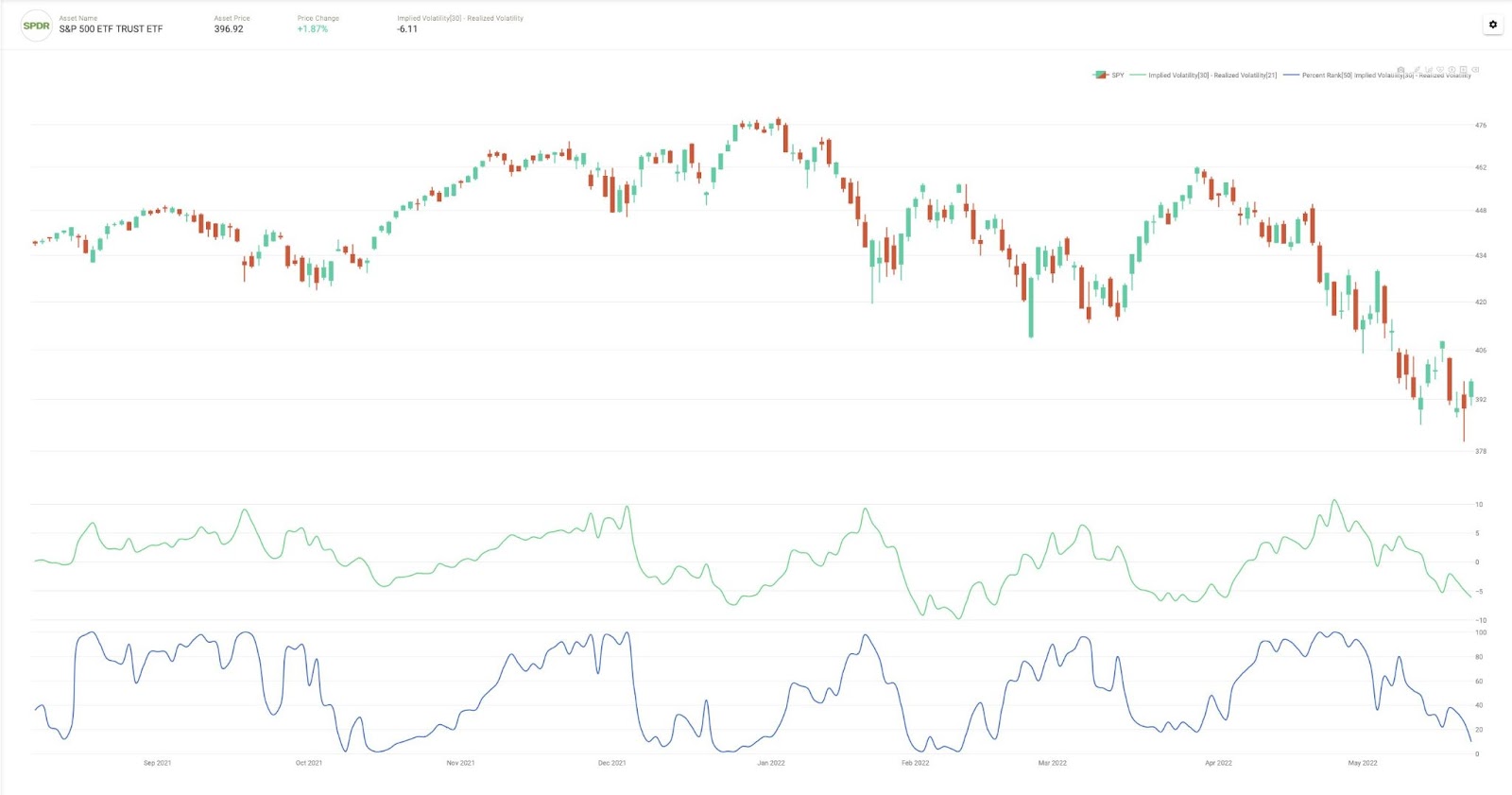
It makes more sense to have exposure to underlying markets, synthetically (i.e., own options). This is based on the current relationship between realized and implied volatility.

Graphic: Via Robson Chow, founder at Tradewell. “The spread between IV and RV remains quite low relative to the past 50 trading days and 1st decile in the historical data.  It is printing where, historically, the most forward realized volatility and the weakest relative mean returns over the next 60 days can be expected.”

This is in contrast to the thesis that “long volatility is a poor equity hedge” because, on average, it’s overpriced and has less than a 100% negative correlation with the equity market.

Graphic: Via Banco Santander SA (NYSE: SAN) research.

Given fundamental contexts, many foresee continued weaknesses. Notwithstanding, markets are stretched to the downside and the path of least resistance, based on prior comments, is up.

This is with the caveat that traders should look at the current window of time as a period during which markets have less pressure to rally against. Per SpotGamma, this is due to the put-heavy options expiration (OPEX), Friday. 

Still, the rally into Monday “pulled forward some of the energy from [those] options that were to roll off,” and now, participants are “much less hedged than they were.” Should demand return, that will bid options prices and likely solicit liquidity provider pressures which, all else equal, start to cool into the $3,700.00 S&P 500 area.

Graphic: Via SpotGamma.

Technical: As of 6:15 AM ET, Tuesday’s regular session (9:30 AM – 4:00 PM ET), in the S&P 500, will likely open in the middle part of a negatively skewed overnight inventory, inside of prior-range and -value, suggesting a limited potential for immediate directional opportunity.

In the best case, the S&P 500 trades higher; activity above the $3,943.25 HVNode puts in play the $3,969.00 VPOC. Initiative trade beyond the VPOC could reach as high as the $4,061.00 VPOC and $4,095.00 ONH, or higher.

In the worst case, the S&P 500 trades lower; activity below the $3,943.25 HVNode puts in play the $3,908.75 MCPOC. Initiative trade beyond the MCPOC could reach as low as the $3,862.75 LVNode and $3,831.00 VPOC, or lower.

Click here to load today’s key levels into the web-based TradingView charting platform. Note that all levels are derived using the 65-minute timeframe. New links are produced, daily.
Graphic: 65-minute profile chart of the Micro E-mini S&P 500 Futures.

Considerations: Push-and-pull, as well as responsiveness near key-technical areas (discernable visually on a chart), suggests technically-driven traders with shorter time horizons are very active.

Such traders often lack the wherewithal to defend retests.

Large participants (who often move by committee) seldom respond to key technical inflections. It is their activity that often results in poor reliability of our technical levels.

Sometimes, the better trade is to wait for the larger participants’ entry and use the expansion of the range as a confirmation of a new trend.

Catalysts to consider include the release of Federal Open Market Committee (FOMC) minutes, Wednesday.
Definitions

Overnight Highs And Lows (ONH and ONL): Typically, there is a low historical probability associated with overnight rally-highs (lows) ending the upside (downside) discovery process.

Volume Areas: A structurally sound market will build on areas of high volume (HVNodes). Should the market trend for long periods of time, it will lack sound structure, identified as low volume areas (LVNodes). LVNodes denote directional conviction and ought to offer support on any test. 

If participants were to auction and find acceptance into areas of prior low volume (LVNodes), then future discovery ought to be volatile and quick as participants look to HVNodes for favorable entry or exit.

POCs: POCs are valuable as they denote areas where two-sided trade was most prevalent in a prior day session. Participants will respond to future tests of value as they offer favorable entry and exit.

MCPOCs: POCs are valuable as they denote areas where two-sided trade was most prevalent over numerous day sessions. Participants will respond to future tests of value as they offer favorable entry and exit.

About

After years of self-education, strategy development, mentorship, and trial-and-error, Renato Leonard Capelj began trading full-time and founded Physik Invest to detail his methods, research, and performance in the markets.

Capelj also develops insights around impactful options market dynamics at SpotGamma and is a Benzinga reporter.

Some of his works include conversations with ARK Invest’s Catherine Wood, investors Kevin O’Leary and John Chambers, FTX’s Sam Bankman-Fried, Kai Volatility’s Cem Karsan, The Ambrus Group’s Kris Sidial, among many others.

Disclaimer

In no way should the materials herein be construed as advice. Derivatives carry a substantial risk of loss. All content is for informational purposes only.