Categories
Commentary

Market Commentary For The Week Ahead: ‘Follow The Flow’

Key Takeaways:

What Happened: After prices were advertised below balance in the week prior, responsive buyers in the S&P 500 began a rally that found acceptance back inside a larger balance-area, near the $3,800 high-open interest strike.

Thereafter, initiative buyers extended the S&P 500’s rally, breaking the index above its $3,824.25 balance-area high (BAH), before establishing acceptance near the $3,850.00 price extension, an upside target, and auctioning back into range, repairing poor structures left in the wake of discovery.

What Does It Mean: In light of a failed breakdown in the week prior, U.S. stock indexes were best positioned for further downside discovery. However, after what appears to be aggressive buying in response to prices below value, it was clear that was not the case.

This leads to the following question: why did selling stop on January 15? One answer, aside from a positive start to the earnings season and prospects for further stimulus, may be OPEX, the January 15 option expiry. On expiration days, delta and gamma exposures change — depending on how derivatives exposure is removed or rolled — which causes dealers to adjust hedges.

According to SpotGamma, the January 15 expiry “resulted in a ~50% reduction in single stock gamma … [which] creates volatility because, as large options positions expire[], are closed and/or rolled, dealers have large hedges they need to adjust. There is a trove of data to suggest that the bulk of single stock call activity is long calls, and based on that we believe dealers (who are short calls vs long stock) therefore have long stock positions to sell.”

Put more simply, the price action may have been attributable to the sale of long stock that hedged expiring short derivatives exposure above the market (i.e., call side).

Per the SpotGamma S&P 500 dealer hedging graphic for the January 15 expiry below, “The black line was the mark on Thursday evening, with the red line being the forecasted position on Tuesday. This red line being substantially lower than the black suggests that dealers had to reduce delta exposure as a result of expiration. Note there is a larger shift at overhead prices suggesting this was a ‘call heavy’ expiration.”
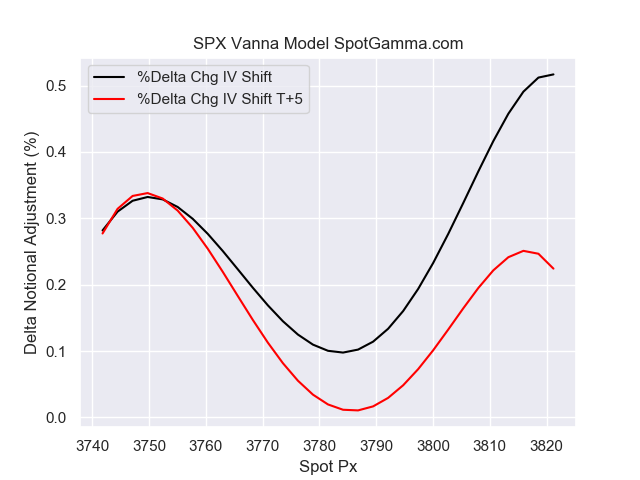
Graphic 1: SpotGamma S&P 500 dealer hedging graphic for the January 15 options expiry

After the VIX (i.e., CBOE’s Volatility Index) expiry on January 20, alongside the inauguration of President Joe Biden, the prospects for a rally improved as “event premium in IV dries up … [and] put values drop, which allows dealers (who are short puts) to buy back short hedges … [fueling] a quick rally up to the 3850SPX/385SPY level (green arrow).”

Graphic 2: SpotGamma S&P 500 Gamma Levels

Adding, the number of put options sold to open exceeded the number bought to open, per SpotGamma, suggesting increased confidence in higher prices as market participants look to options for income, and not insurance.

Historically, the returns after such developments are mixed — more often the appearance of strong initiative buying surfaces (e.g., August and January 2020) before a liquidation helps correct excess inventory, and bring sense back into the market.

Graphic 3: SpotGamma plots opening option positions.

What To Expect: During Friday’s session in the S&P 500, responsive buying surfaced after a test of the $3,818.25 High-Volume Node (HVNode), above the $3,813.50 ledge (below which is a pocket of low-volume).

In the simplest way, high-volume areas can be thought of as building blocks. A structurally sound market will build on past areas of high-volume. Should the market trend for long periods of time, it will lack sound structure (identified as a low-volume area which denotes directional conviction and ought to offer support on any test).

If participants were to auction and find acceptance into areas of prior low-volume, then future discovery ought to be volatile and quick as participants look to areas of value for favorable entry or exit.

After the S&P 500 found acceptance above the $3,813.50 ledge and $3,824.25 BAH, it encountered responsive selling near the $3,840.75 HVNode, the site of a downtrend line. Since the selling transpired at a visual level, market participants know that technically-driven, short-term traders in control. In other words, institutions (e.g, funds) tend not to transact at exact technical levels.

Given the aforementioned dynamics, participants will come into Monday’s session knowing the following:

  1. The S&P 500’s higher-time frame breakout remains intact, per graphics 7, 8, and 9.
  2. Late last year, JPMorgan Chase & Co. (NYSE: JPM) strategist Marko Kolanovic suggested equities would rally with the S&P 500 auctioning as high as $4,000 on the basis of low rates, improved fundamentals, buybacks, as well as systematic and hedge fund strategies. Since then, Kolanovic downgraded growth and expressed the limited potential for further upside.
  3. The earnings of heavily weighted index constituents suggests participants discount improved speculative flows and delta (e.g., presence of committed buying or selling as measured by volume delta). Please see graphics 4, 5, and 6.
Graphic 4: Supportive order flow in the SPDR S&P 500 ETF Trust (NYSE: SPY), the largest ETF that tracks the S&P 500, on January 20 trend day.
Graphic 5: Supportive order flow in the SPDR S&P 500 ETF Trust (NYSE: SPY), the largest ETF that tracks the S&P 500, on January 22.
Graphic 6: Speculative derivatives activity for the week ending January 23, 2021.
Graphic 7: Daily candlestick chart of the cash S&P 500 Index

Given the above dynamics, the following frameworks apply for next week’s trade.

In the best case, the S&P 500 takes back Friday’s liquidation and auctions above the $3,840.75 HVNode. Expectations thereafter include continued balance or initiative buying to take out the $3,859.75 overnight all-time high (there is a low probability that overnight all-time highs end the upside discovery process). Thereafter buying continues as high as the $3,884.75 price projection, or double the width of the balance-area, the typical target on a balance-area breakout.

In the worst case, any break that finds increased involvement (i.e., supportive flows and delta) below $3,824.25 BAH, would favor continuation as low as the $3,763.75 BAL.

Graphic 8: Profile overlays on a 15-minute candlestick chart of the Micro E-mini S&P 500 Futures

Conclusions: Despite broad-market indices being in a longer-term uptrend, the odds of substantial upside resolve are low. Participants ought to look for favorable areas to transact, such as those high-volume areas in the S&P 500 featured in graphic 8.

All in all, the risk and reward dynamics, at these price levels, are poor.

Graphic 9: 4-hour profile chart of the Micro E-mini S&P 500 Futures

Levels Of Interest: $3,884.75, $3,859.75, $3,840.75 HVNode, $3,824.25 BAH, $3,763.75 BAL.

Cover photo by Jayant Kulkarni from Pexels.

Categories
Commentary

Market Commentary For The Week Ahead: ‘Rally On Pause’

Key Takeaways:

What Happened:

Alongside mixed economic releases, plans for added fiscal stimulus, as well as a start to the Q4 earnings season, U.S. index futures broke balance and auctioned lower.

Given that Friday’s worst case scenario was realized, U.S. stock indexes are positioned for further downside discovery.

Graphic 1: Profile overlays on a 30-minute candlestick chart of the Micro E-mini S&P 500 Futures

What To Expect: Friday’s session in the S&P 500 found responsive buying surface after a test of the $3,741.25 Virgin Point of Control, or VPOC (i.e., the fairest price to do business in a prior session).

Noting: POCs are valuable as they denote areas where two-sided trade was most prevalent. Participants will respond to future tests of value as they offer favorable entry and exit.

In the simplest way, high-volume areas can be thought of as building blocks. A structurally sound market will build on past areas of high-volume. Should the market trend for long periods of time, it will lack sound structure. If participants were to auction and find acceptance into areas of prior low-volume, then future discovery ought to be volatile and quick as participants look to areas of value for favorable entry or exit.

Thereafter, buying pressure quickly disappeared, and the S&P 500 confirmed the balance-break. Now, in light of the market’s search for an area to establish balanced, two-sided trade, participants will come into Tuesday’s session knowing the following:

  1. Prior to a multi-session consolidation, profile structures denoted the presence of short-covering. This was the result of old, weak-handed business emotionally buying to cover short positions, causing swift movement, followed by a stalled advance, or two-sided trade.
  2. Unsupportive speculative flows and delta (e.g., non-presence of committed buying or selling) in some instances, as can be viewed by the order flow graphics 2 and 3 below.
  3. The multi-month upside breakout targeting S&P 500 prices as high as $4,000.00 remains intact, per graphic 4.
  4. After a v-pattern recovery, the S&P 500 consolidated near the $3,800 high-open interest strike, forming a balance-area. This structure was resolved with Friday’s balance-break. A break-out from balance is usually the start of a short-term auction. Therefore, placing trades in the direction of the break is the normal course of action. Trading back into the consolidation (above $3,763.75), thereby invalidating the break-out, may portend a move to the other end of balance ($3,824.25).
Graphic 2: Divergent delta in the iShares Russell 2000 ETF (NYSE: IWM), one of the largest ETFs that track the Russell 2000
Graphic 3: Order flow in the SPDR S&P 500 ETF Trust (NYSE: SPY), the largest ETF that tracks the S&P 500
Graphic 4: Daily candlestick chart of the cash S&P 500 Index

Given the above dynamics, the following frameworks apply for next week’s shortened holiday trade.

In the best case, the S&P 500 remains above its $3,763.75 balance-area low (BAL). Expectations thereafter include continued balance or initiative buying to take out the $3,824.25 balance-area high (BAH).

In the worst case, the S&P 500 remains below its $3,763.75 BAL. Expectations thereafter include a test of the low-volume node (LVNode) near $3,732.75. A break of the LVNode would portend a response near the $3,703.25 balance-break projection.

Conclusions: For now, despite a negative balance-break jeopardizing the bullish thesis, broad-market indices are in a longer-term uptrend. Participants ought to look for favorable areas to transact, such as those big-picture high-volume areas featured in graphic 5.

Graphic 5: 4-hour profile chart of the Micro E-mini S&P 500 Futures

Levels Of Interest: $3,763.75 BAL, $3,824.25 BAH, $3,732.75 LVNode, $3,703.25 balance-break projection.

Cover photo by Oleg Magni from Pexels.

Categories
Commentary

Market Commentary For 1/11/2021

Notice: To view this week’s big picture outlook, click here.

What Happened: Alongside a rise in cases of the COVID-19 coronavirus that could delay the pending economic recovery, U.S. index futures backed off their all-time highs during weekend trade.

What Does It Mean: Last week’s long-liquidation and subsequent recovery left the market with minimal excess (i.e., a proper end to discovery) at the highs, and a strong close, taking out the overnight stat at $3,817.75 (which had low odds of remaining, given that overnight all-time highs rarely end the upside discovery process).

Noting: Excess forms after an auction has traveled too far in a particular direction and portends a sustained reversal. The absence of excess, in the case of a high, suggests not enough conviction; in such case participants will liquidate (i.e., back off the high) and strengthen the market, before following through.

What To Expect: Monday’s regular session (9:30 AM – 4:00 PM ET) will likely open on a gap, in prior-balance and -range, implying higher volatility at the open.

Noting: In most cases, a break-out (i.e., gap) from balance is usually the start of a short-term auction. Therefore, placing trades in the direction of the gap is the normal course of action. Further, gaps tend to fill within the first half-hour of regular trade (9:30 AM – 4:00 PM ET). The longer a gap holds, however, the higher odds of continuation. Should responsive buyers auction through the entire gap, then conditions have changed.

Two major dynamics to note:

  1. For numerous sessions, profile structures denoted the presence of short-covering, the result of old, weak-handed business emotionally buying to cover short positions, causing swift movement followed by a stalled advance, or two-sided intraday trade.
  2. The week ending January 8 established a v-pattern recovery, a price sequence that ought to be followed by further price discovery, as high as the 100% price projection, which happens to be near the multi-month upside breakout target at $4,000.

Given the above dynamics, the go/no-go level for upside in the S&P 500 is the $3,824.25 regular trade high. The go/no-go level for downside is the regular trade low at $3,775.25.

In the best case, the S&P 500 remains above its $3,762.25 high-volume node (HVNode). Expectations thereafter include continued balance or a response followed by initiative buying to take out the price extension at $3,847.75. 

In the worst case, the S&P 500 initiates below its $3,762.25 HVNode. Expectations thereafter include a test of the minimal excess low near $3,732.75 (a LVNode).

As of now, all broad-market indices are in an uptrend, evidenced by higher prices and value. A break of Monday’s regular session (9:30 AM – 4:00 PM ET) low would jeopardize the bullish thesis.

Levels Of Interest: $3,762.25 HVNode, $3,732.75 LVNode, $3,824.25 rally high, as well as the $3,847.75 price extension.

Categories
Commentary

Market Commentary For The Week Ahead: ‘Euphoria Is The Status Quo’

Key Takeaways:

  • Higher-time frame breakouts remain intact.
  • Volatility rises; markets are a tad euphoric
  • Equity funds went all in at the top, literally
  • Corporate credit outlook enhanced greatly. 
  • Earnings could rise faster than anticipated. 
  • Blue wave implies more stimulus, spending.
  • The bull market broadens as sectors rotate
  • M2 and yields break out; the Fed could act.

What Happened: As investors looked beyond a weak jobs report and political uncertainty, to added economic stimulus and the coming earnings season, U.S. index futures hit new highs.

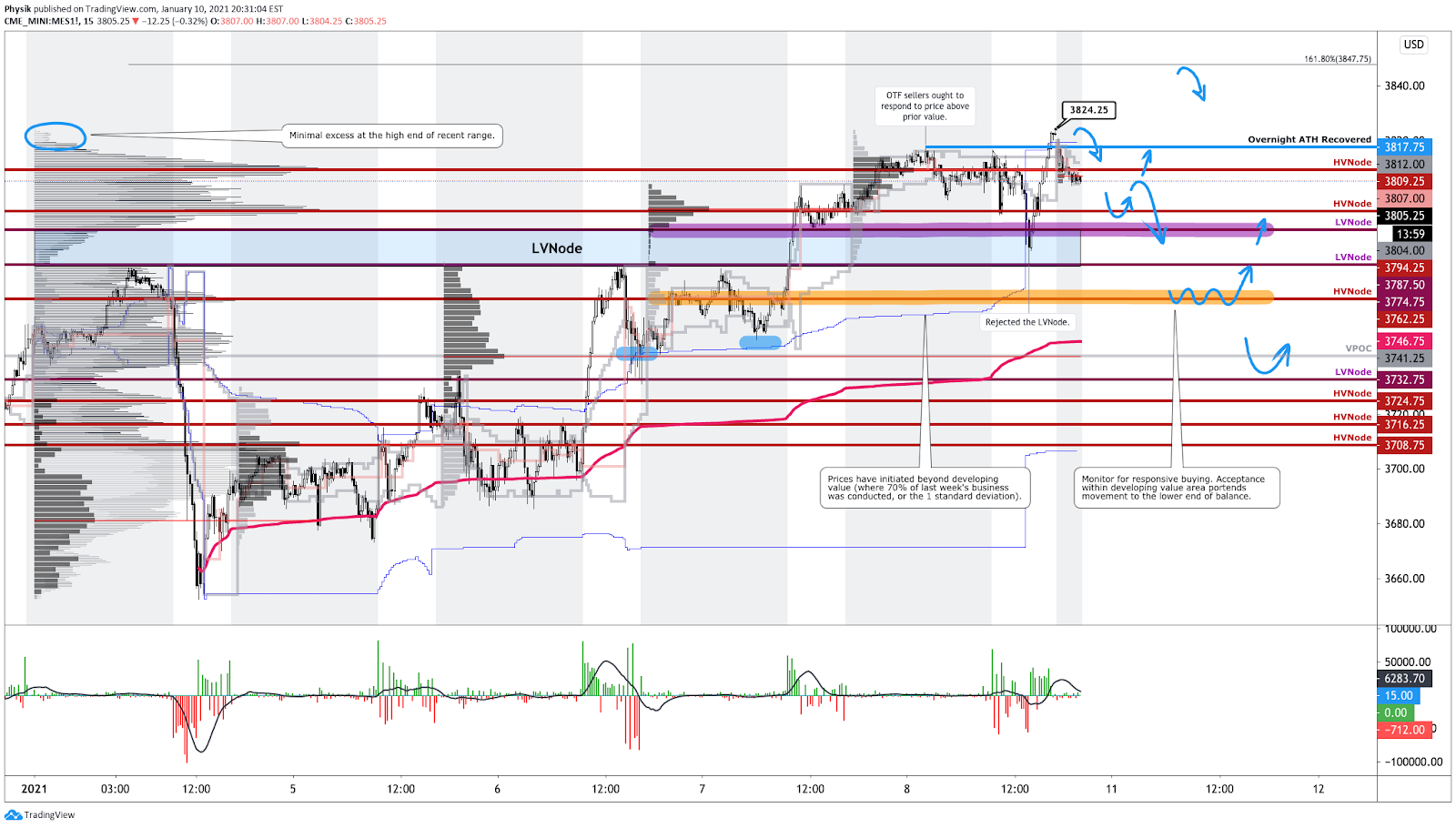
Graphic 1: Profile overlays on a 15-minute candlestick chart of the Micro E-mini S&P 500 Futures

What To Expect: Friday’s session in the S&P 500 found initiative buying surface after a test of $3,774.75, the lower boundary of the low-volume area left in the wake of Thursday’s opening drive.

The long-liquidation and subsequent recovery left the market with minimal excess (i.e., a proper end to discovery) at the highs, and a strong close, taking out the overnight stat at $3,817.75 (which had low odds of remaining, given that overnight all-time highs rarely end the upside discovery process).

Noting: Excess forms after an auction has traveled too far in a particular direction and portends a sustained reversal. The absence of excess, in the case of a high, suggests not enough conviction; in such case participants will liquidate (i.e., back off the high) and strengthen the market, before following through.

In light of the market’s search for an area to establish balanced, two-sided trade, participants will come into Monday’s session knowing the following: 

  1. The multi-month upside breakout targeting S&P 500 prices as high as $4,000.00 remains intact.
  2. Prices are above all major moving averages, including the year-to-date volume-weighted average price (VWAP). 
  3. After the resolution of last Monday’s long-liquidation, the market shifted into price discovery mode, evidenced by higher prices and value migration.
  4. For numerous sessions, profile structures denoted the presence of short-covering, the result of old, weak-handed business emotionally buying to cover short positions, causing swift movement followed by a stalled advance, or two-sided intraday trade.
  5. The week ending January 8 established a v-pattern recovery, a price sequence that ought to be followed by further price discovery, as high as the 100% price projection, which happens to be near the multi-month upside breakout target at $4,000.
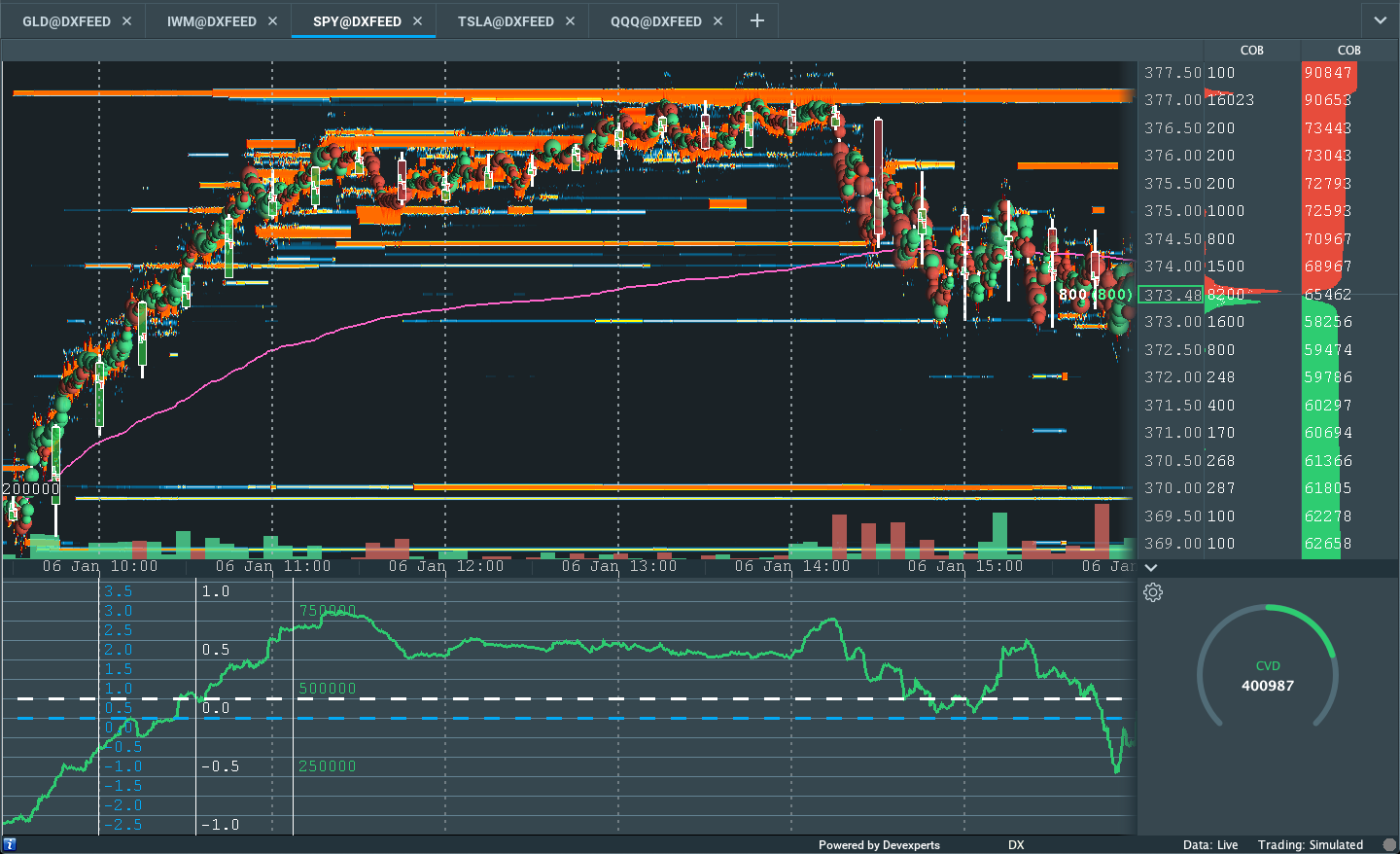
  6. Unsupportive speculative flows and delta (e.g., commitment of buying or selling) in some instances, as can be viewed by order flow graphics 2 and 3 below. 
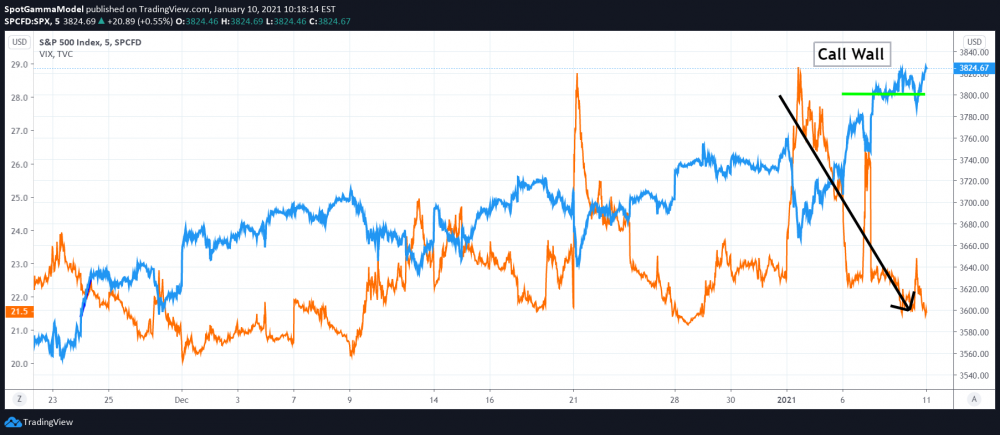
  7. Alongside the long gamma narrative, in which dealers buy dips and sell rips to hedge their exposure, record options activity, among other dynamics, the S&P 500 closed near $3,800, a high open interest strike. For sustained upside directional resolve, participants would look for this exposure to roll up. 
Pictured: Divergent delta in the iShares Russell 2000 ETF (NYSE: IWM), one of the largest ETFs that track the Russell 2000
Pictured: Order flow in the SPDR S&P 500 ETF Trust (NYSE: SPY), the largest ETF that tracks the S&P 500
Graphic 4: S&P 500 tests the $3,800 high open interest strike, per SpotGamma

Given the above dynamics, the following frameworks apply for next week’s trade.

In the best case, the S&P 500 remains above its $3,762.25 high-volume node (HVNode). Expectations thereafter include continued balance or a response followed by initiative buying to take out the price extension at $3,847.75. 

Noting: Any structure that denotes meaningful buying continuation, not short-covering, would feature elongated, upside range expansion on committed volumes, as well as the migration of value. 

In the worst case, the S&P 500 initiates below its $3,762.25 HVNode. Expectations thereafter include a test of the minimal excess low near $3,732.75 (a LVNode). A break of Monday’s regular session (9:30 AM – 4:00 PM ET) low would jeopardize the bullish thesis. 

Two go, no-go levels exist; trade that finds increased involvement above $3,824.25 and below $3,775.25 would suggest a change in conviction. Anything in-between favors responsive trade.

Conclusions: In a GMO article, Jeremy Grantham expressed his opinion on recent market activity.

I am long retired from the job of portfolio management but I am happy to give my opinion here: it is highly probable that we are in a major bubble event in the U.S. market, of the type we typically have every several decades and last had in the late 1990s. It will very probably end badly, although nothing is certain. I will also tell you my definition of success for a bear market call. It is simply that sooner or later there will come a time when an investor is pleased to have been out of the market. That is to say, he will have saved money by being out, and also have reduced risk or volatility on the round trip. This definition of success absolutely does not include precise timing. (Predicting when a bubble breaks is not about valuation. All prior bubble markets have been extremely overvalued, as is this one. Overvaluation is a necessary but not sufficient condition for their bursting.) Calling the week, month, or quarter of the top is all but impossible.

Continuing, in addition to market participants reckoning with the uneven recovery, stimulus, trade, inflation, among other risks, they must also worry about something that’s arguably more important: price and value.

As of now, all broad-market indices are in an uptrend, evidenced by higher prices and value. A break below $3,600.00 in the S&P 500 would denote a substantial change in tone.

Levels Of Interest: $3,762.25 HVNode, $3,732.75 LVNode, $3,824.25 rally high, as well as the $3,847.75 price extension.

Bonus: Some opportunities unfolding in the week ahead.

Photo by Valdemaras D. from Pexels.

Categories
Commentary

Market Commentary For The Week Ahead: ‘Hello, Goodbye’

Key Takeaways:

What Happened: Coming into the extended holiday weekend, on tapering volumes, U.S. index futures balanced for four regular trading sessions (9:30 AM – 4:00 PM ET), before breaking out.

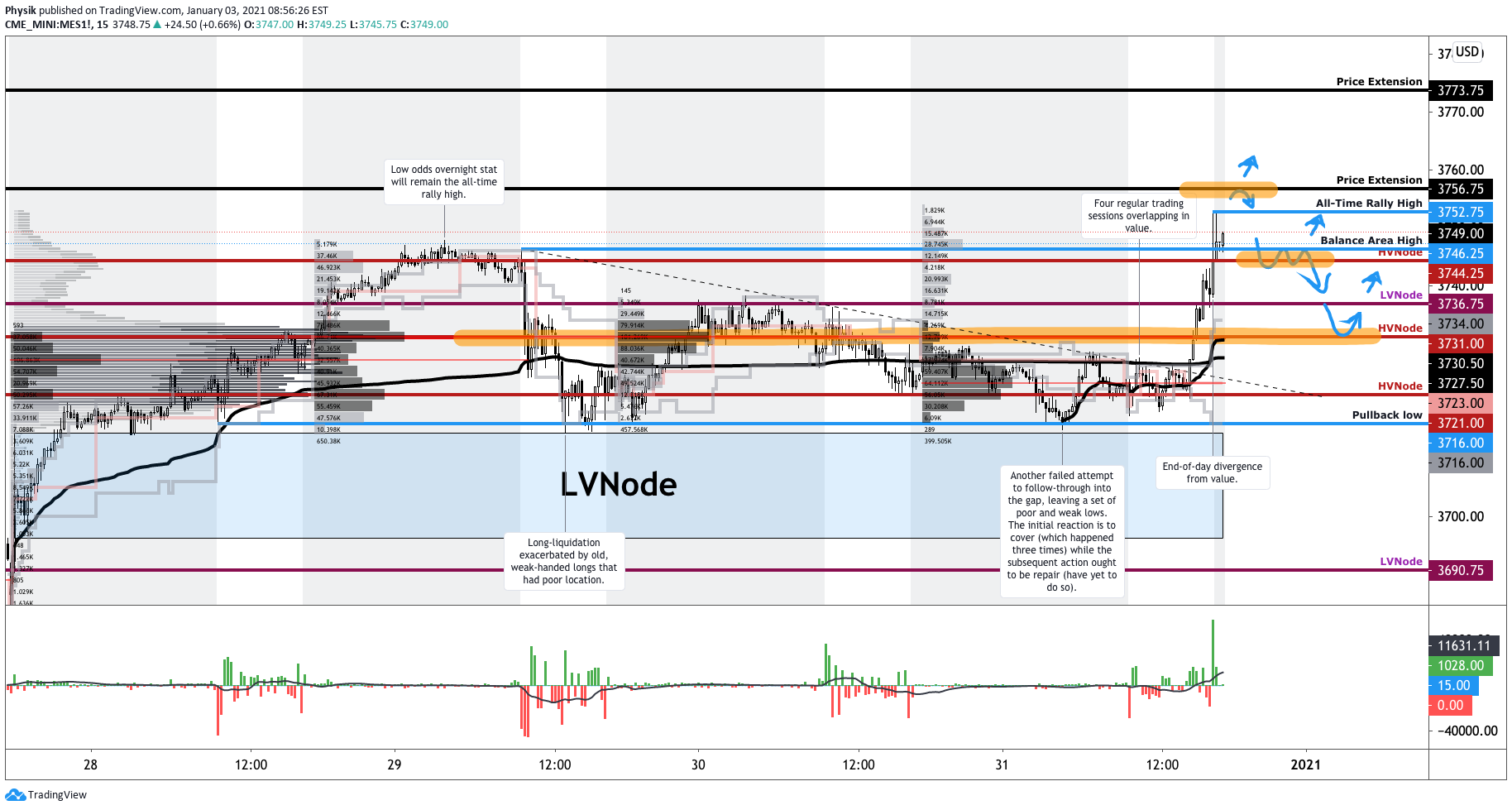
Pictured: Profile overlays on a 15-minute candlestick chart of the Micro E-mini S&P 500 Futures

What To Expect: Thursday’s session found initiative buying surface above the $3,731.00 high-volume node (HVNode), the market’s most recent perception of value.

Given four-sessions worth of unchanged value, and the failure to fill the gap beneath a weak low (i.e., a visual level that attracts the business of short-term, technically-driven market participants) at $3,714.50, participants will come into Monday’s session knowing the following:

  1. Amid Thursday’s late-day buying, price diverged from value.
  2. The overnight rally high at $3,747.75 was recovered (i.e., based on historical trade, there were low odds that the overnight all-time high would end the upside discovery process).
  3. The multi-month upside breakout targeting S&P 500 prices as high as $4,000.00 remains intact.

In light of the above dynamics, the following frameworks apply for next week’s trade.

In the best case, the S&P 500 remains above its $3,731.00 HVNode. Expectations thereafter include continued balance, or a response followed by initiative buying to take out the price extension at $3,756.75.

In the worst case, the S&P 500 initiates below its $3,731.00 HVNode. Expectations thereafter include a test of the weak, minimal excess low at $3,714.50, and subsequent follow-through as low as the $3,691.00 break-point. 

Noting: Excess forms after an auction has traveled too far in a particular direction and portends a sustained reversal. Absence of excess, in the case of a low, suggests minimal conviction; participants will cover (i.e., back off the low) and weaken the market, before following through.

Two go, no-go levels exist; trade that finds increased involvement above $3,752.75 and below $3,714.50 would suggest a change in conviction. Anything in-between favors responsive trade.

Conclusion: From an uneven recovery, stimulus, elections, trade, and the like, it helps to boil it down to what actually matters: price and value. 

Though risks remain, markets are pricing in the odds of a continued rebound. All broad-market indices are in an uptrend. A break below $3,600.00 in the S&P 500 would denote a substantial change in tone.

Pictured: Retest of the upside breakpoint on a weekly candlestick chart of the cash S&P 500 Index

Levels Of Interest: $3,752.75 rally-high, $3,714.50 weak low, $3,731.00 HVNode, $3,756.75 price extension, $3,691.00 break-point.

Bonus: Here is a look at some of the opportunities unfolding.

Photo by Max Walter from Pexels.

Categories
Commentary

Market Commentary For 12/31/2020

Notice: To view this week’s big picture outlook, click here.

What Happened: After a range-bound balancing day, U.S. index futures tested lower overnight alongside news that COVID-19 case counts were rising, before turning at a visual level, and trading back into range.

What Does It Mean: Participants further accepted the upside break of $3,691.00 in the S&P 500, a boundary that attracted responsive selling in the week prior.

What To Expect: Thursday’s regular session (9:30 AM – 4:00 PM ET) will open within prior-balance and -range.

Given three-sessions worth of unchanged value, and the failure to fill the gap beneath a weak low (i.e., a visual level that attracts the business of short-term, technically-driven market participants) at $3,714.50, participants will come into today’s session knowing the following: (1) markets are closed on Friday, (2) the failure to resolve directionally points to the absence of larger, other time frame participants (i.e., institutions that don’t transact at technical levels), (3) the overnight rally high at $3,747.75 remains intact (i.e., historically, there is a low probability that overnight all-time highs end the upside discovery process), and (4) the period leading up to New Year, after Christmas, is historically bullish.

Noting: Excess forms after an auction has traveled too far in a particular direction and portends a sustained reversal. Absence of excess, in the case of a low, suggests minimal conviction; participants will cover (i.e., back off the low) and weaken the market, before following through.

Putting it all together, the S&P 500 is trading within a larger bracket; trade between $3,747.75 and $3,714.50 ought to be responsive. Auctioning beyond either reference would end the bracketing process and portend continuation.

Levels Of Interest: Overnight high at $3,747.75, Tuesday’s pullback low at $3,714.50, the upside extension at $3,756.75 and the $3,691.00 break-point.

Bonus: Below, you will find two visuals. The first suggests the big picture S&P 500 breakout remains intact. The second suggests conviction is thinning, given light intra-day participation (i.e., the activity that occurred before the end-of-day positioning).

Pictured: Daily candlestick chart of the cash S&P 500 Index on the left. Intraday order flow in the SPDR S&P 500 ETF Trust (NYSE: SPY) on the right.
Categories
Commentary

Market Commentary For 12/30/2020

Notice: To view this week’s big picture outlook, click here.

What Happened: After a liquidation in the backdrop of a longer-term uptrend, U.S. index futures auctioned off their lows and traded back into range.

What Does It Mean: Participants further accepted the upside break of $3,691.00 in the S&P 500, a boundary that attracted responsive selling in the week prior.

What To Expect: Wednesday’s regular session (9:30 AM – 4:00 PM ET) will open on a gap within prior-balance and -range. Given unchanged value and a failure to fill the gap beneath Monday morning’s pullback low at $3,716.00, participants will come into today’s session knowing yesterday’s downside reversal left minimal excess.

Noting: Excess forms after an auction has traveled too far in a particular direction and portends a sustained reversal. Absence of excess, in the case of a low, suggests minimal conviction; participants will cover (i.e., back off the low) and weaken the market, before following through.

Putting it all together, the S&P 500 is trading within a larger bracket; trade between $3,747.75 and $3,714.50 ought to be responsive. Auctioning beyond either reference would end the bracketing process and portend continuation.

Levels Of Interest: Overnight high at $3,747.75, Tuesday’s pullback low at $3,714.50, the upside extension at $3,756.75 and the $3,691.00 break-point.

Categories
Commentary

Market Commentary For 12/16/2020

What Happened: Ahead of today’s Federal Reserve policy decision, U.S. index futures auctioned higher overnight.

What Does It Mean: During Tuesday’s regular trade, the S&P 500 initiated up to the $3,667.75 high-volume node, a valuable price, before sellers responded, extended lower, and then buyers retook control, one time framing higher into the close.

Given that Monday’s selling activity was negated yesterday, the S&P 500 sits in a tactically bullish position, confirming the higher-time frame upside breakout which targets prices as high as $4,000.

Pictured: Daily candlestick chart of the cash S&P 500 Index

Adding, the overnight auction brought the index back above its most valuable price over the past two weeks of trade, the most positive outcome.

What To Expect: In light of the overnight gap higher, the following frameworks apply for today’s trade.

In the best case, buyers maintain conviction through the Federal Reserve event, and hold the index above the $3,667.75 high-volume node. Thereafter, upside references include the high-volume node at $3,707.75, and then the prior all-time rally high.

In the worst case, if the S&P 500 is brought back below $3,667.75, participants would look to whether the auction — again — resists last Friday’s range. As stated yesterday, accepting Friday’s range puts in play the minimal excess lows near $3,625.00. Any activity below $3,625.00 would put in question the higher-time frame breakout.

Levels Of Interest:  $3,667.75 high-volume node is the go/no-go level today.

Key Takeaways: In the face of volatile positioning, and the S&P 500’s balancing activity, the macro- and technical-landscape remains bullish.

In support of a rally is the (1) return of systematic strategies, (2) seasonality, and (3) a weaker dollar, among other factors.

Still, the Fed decision and rebalancing are around the corner, while sentiment and other positioning metrics are at extremes. It’s a time to get picky with trades.

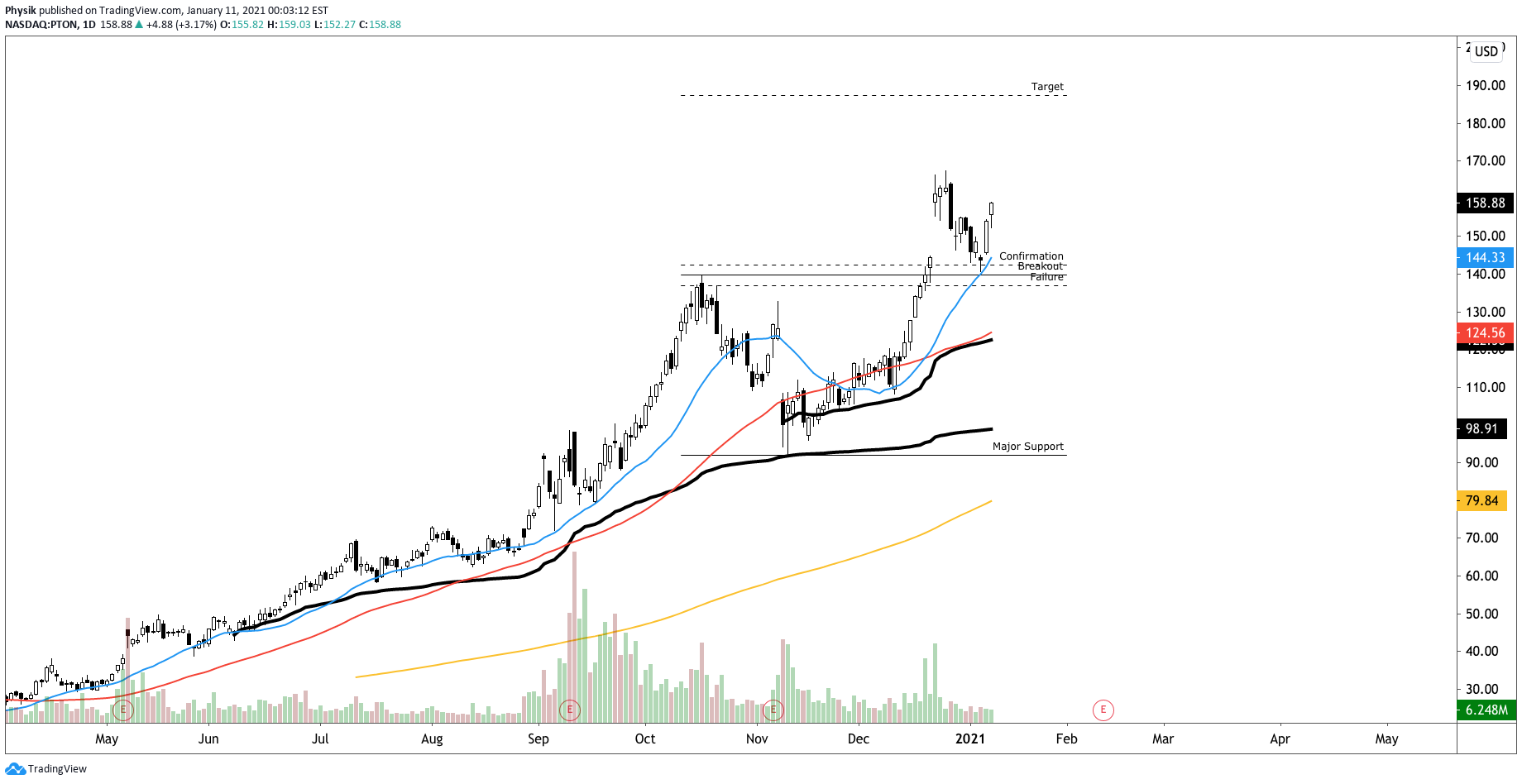
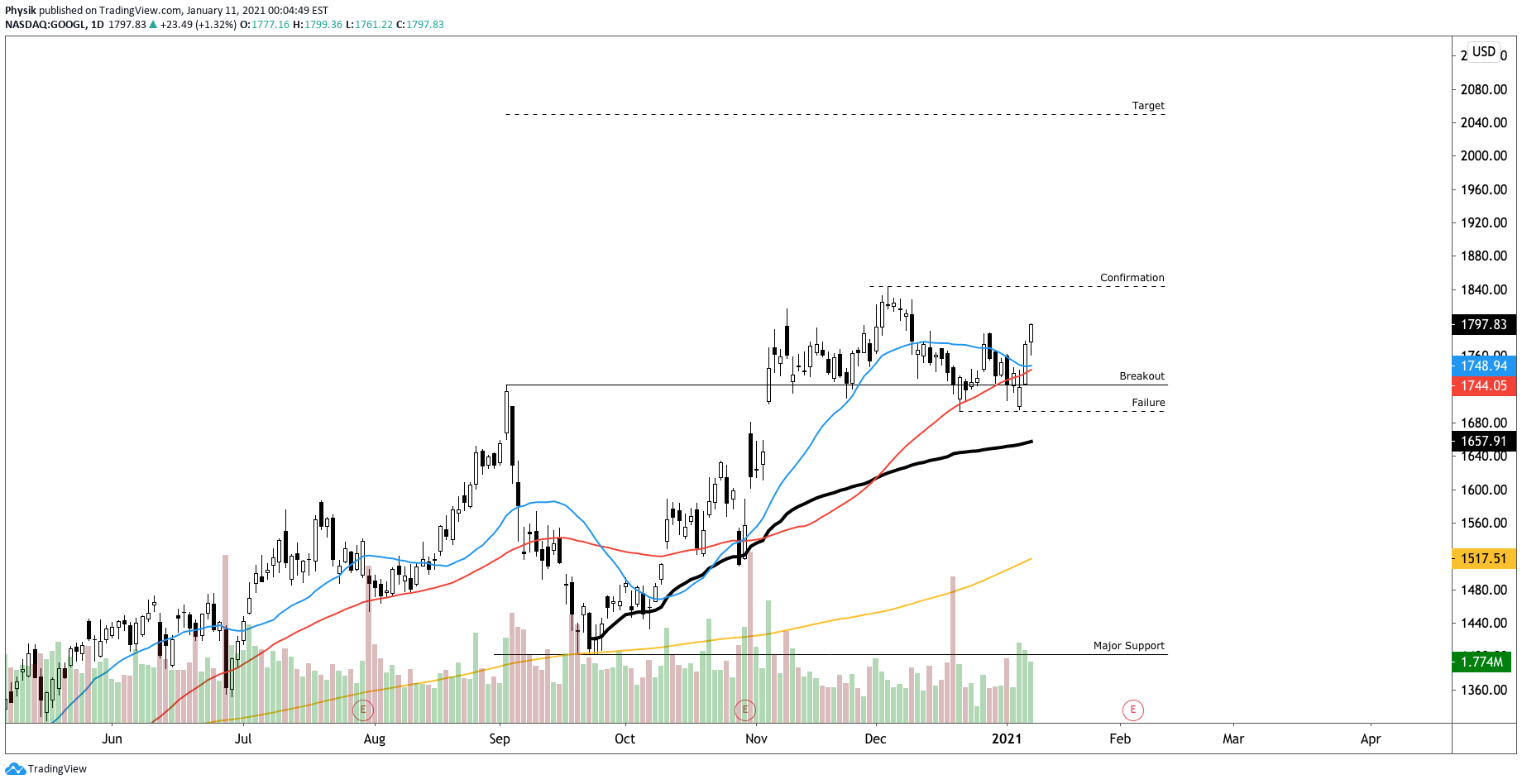
Bonus: Here is a look at a few of the opportunities unfolding.

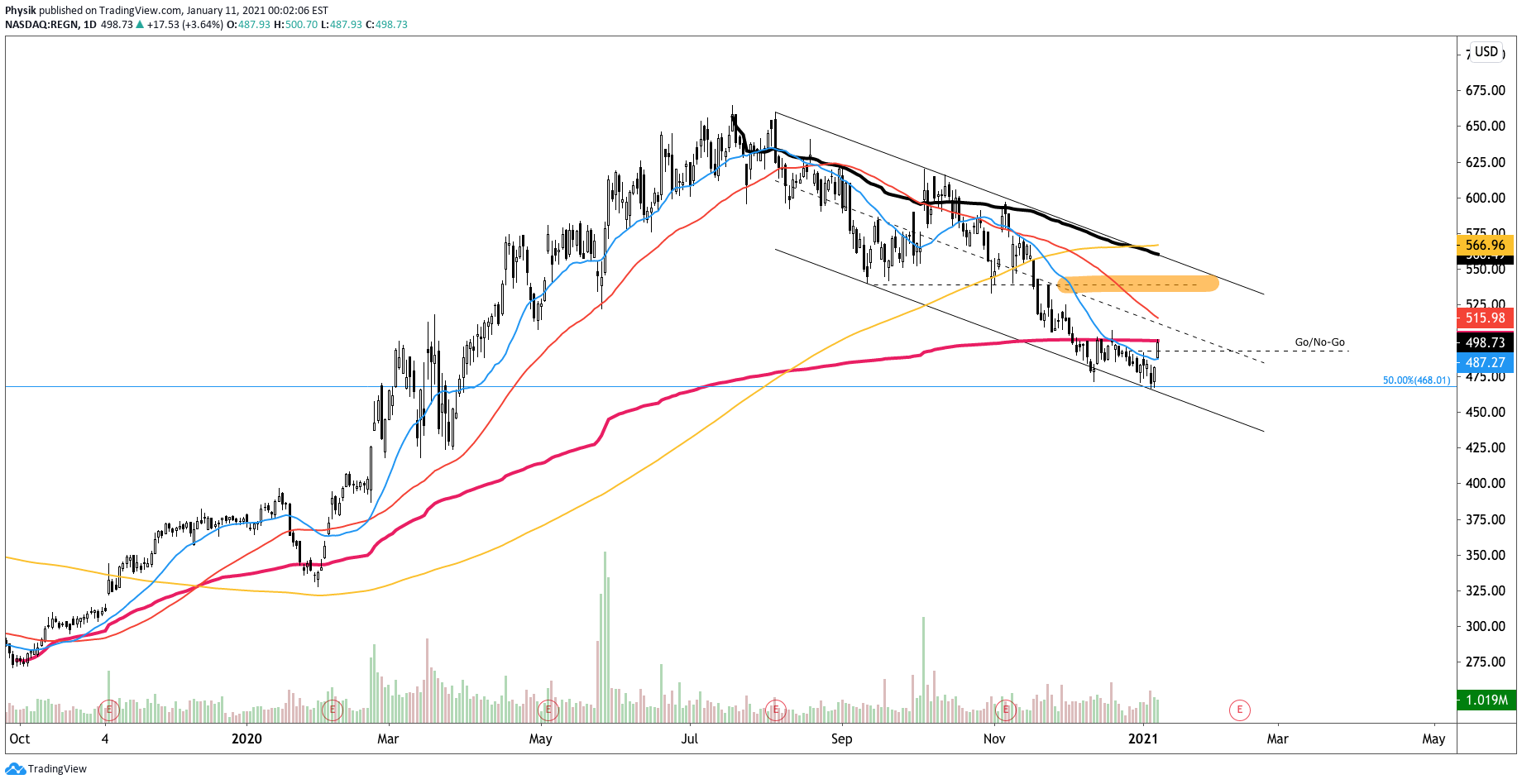
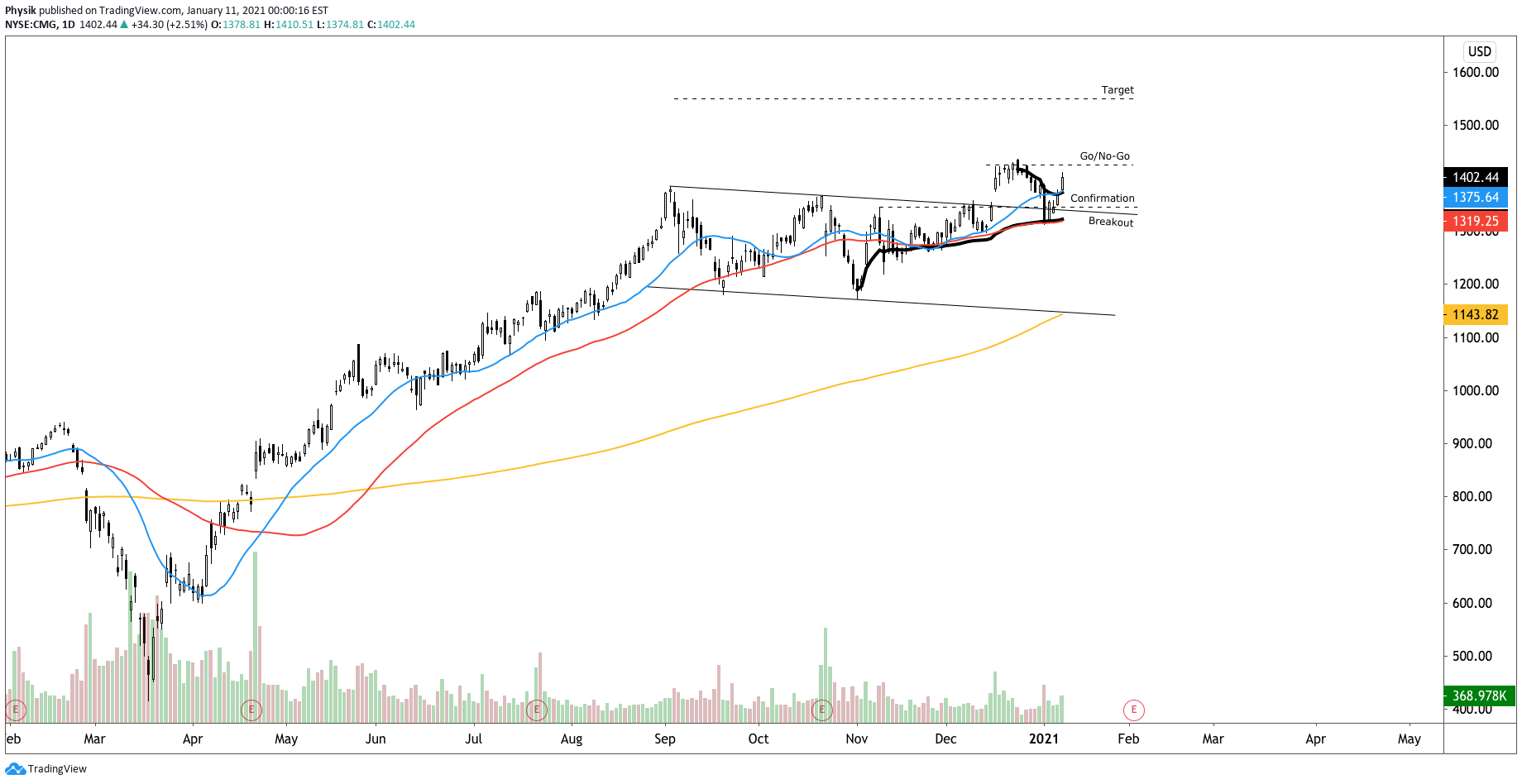
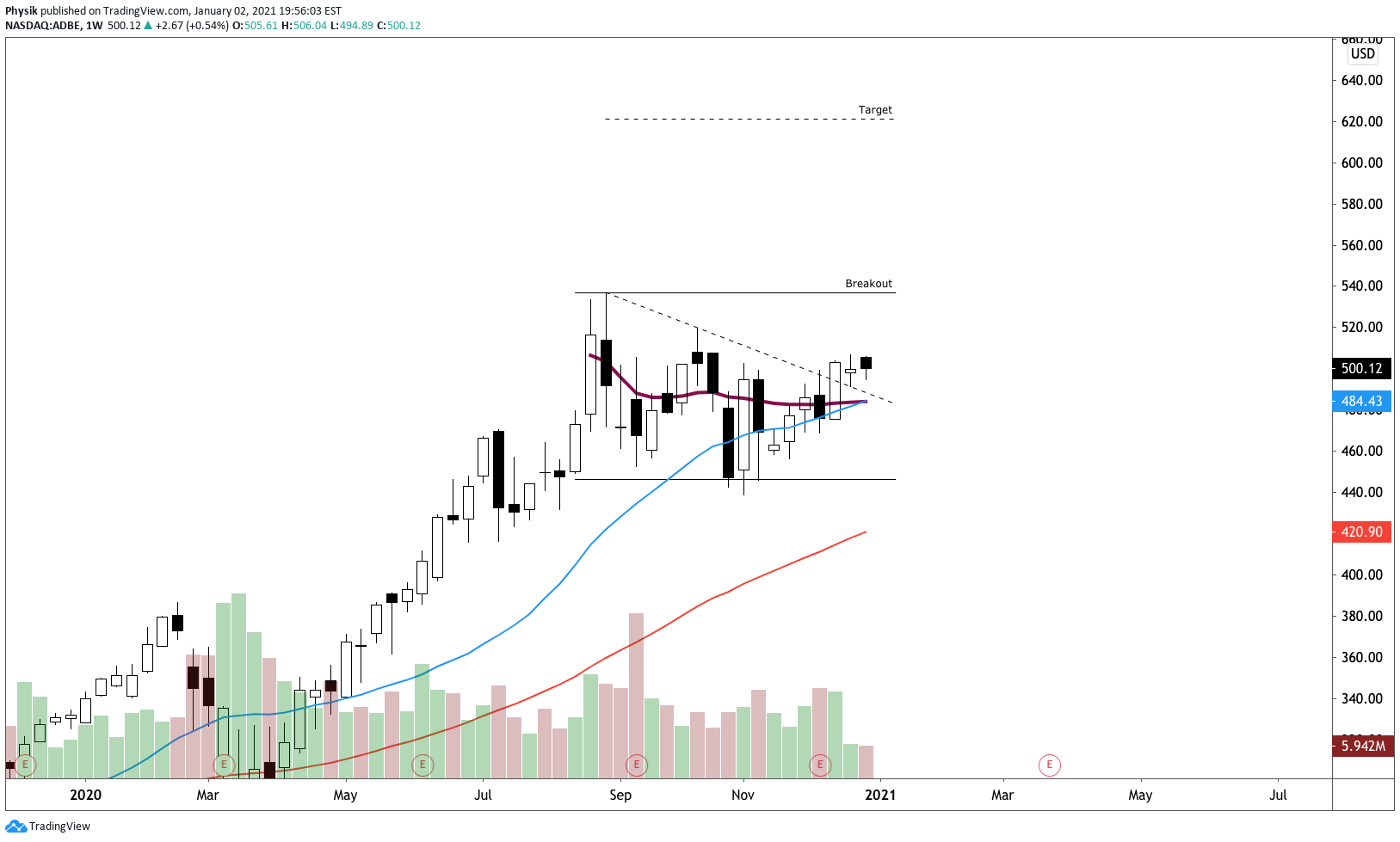
Chipotle Mexican Grill Inc (NYSE: CMG) – Potential for upside breakout and continuation. Upgraded on Wednesday.

Shopify Inc (NYSE: SHOP) – Balance just shy of channel boundary. Potential for upside breakout and continuation.

Apple Inc (NASDAQ: AAPL) – Acceptance after higher-time frame balance-breakout.

Advanced Micro Devices Inc (NASDAQ: AMD) – Acceptance after higher-time frame balance-breakout.

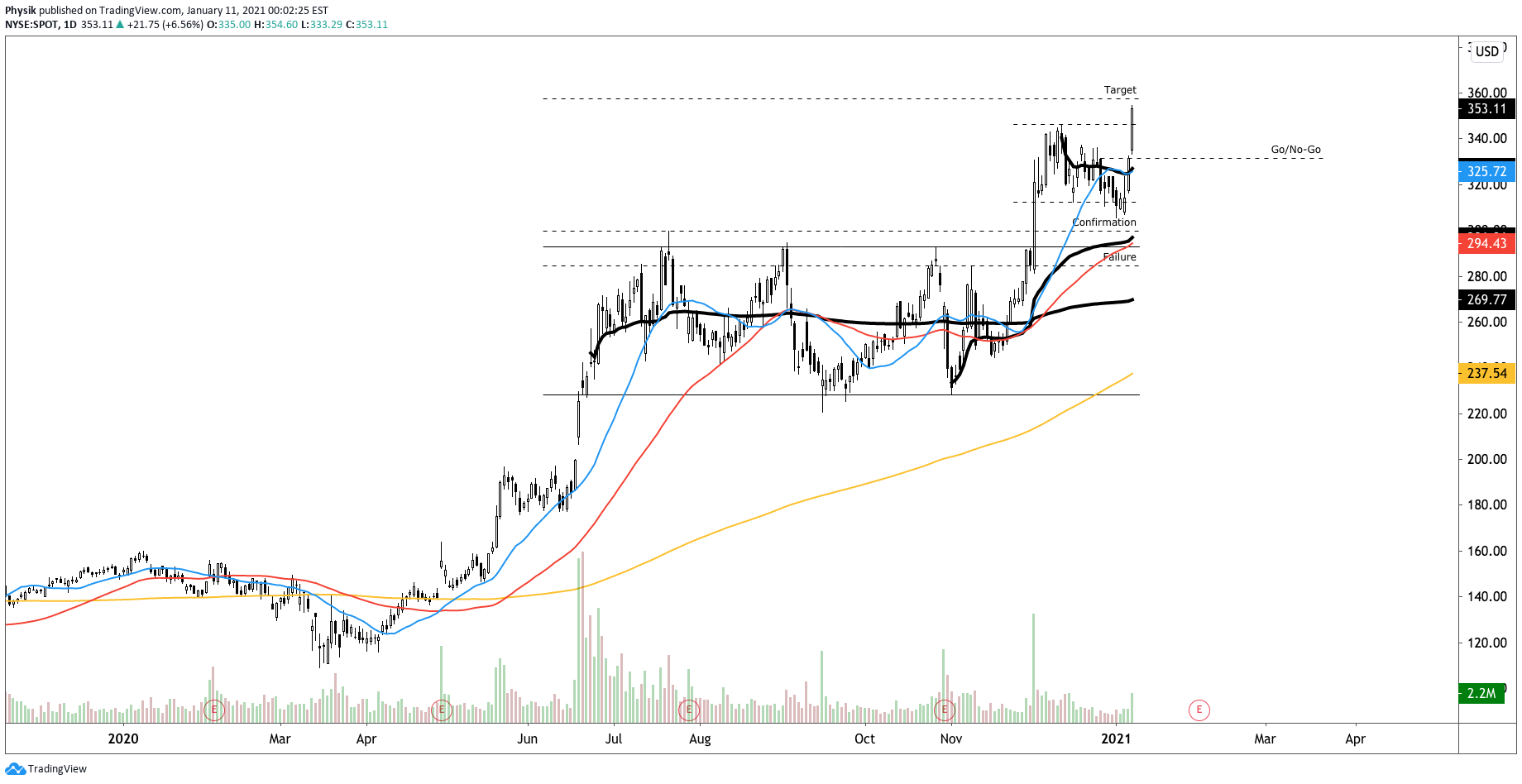
Spotify Technology SA (NYSE: SPOT) – Acceptance after higher-time frame balance-breakout. Potential remains for a push to the balance-area projection.

Categories
Commentary

Market Commentary For 12/10/2020

What Happened: U.S. index futures were flat overnight after a trend-day lower from fresh new all-time highs.

What Does It Mean: During Wednesday’s regular trading, sellers extended range down to the micro-composite high-volume node near $3,667.75, a price level where participants spent a large amount of time in the past. The session ended outside of prior balance and range with poor profile structure denoting the presence of directional conviction.

Overnight, participants accepted the lower prices, holding near Wednesday’s low.

What To Expect: In light of yesterday’s selling, the following frameworks apply for today’s trade.

In the best case, responsive participants surface at the $3,667.75 high-volume node and buyers make an attempt to repair some of Wednesday’s poor structure.

In the worst case, if the S&P 500 auctions below $3,667.75, participants would look to whether the $3,640.00 balance-boundary and offers a response. If not, initiative buying has been exhausted — the chances of sustained upside directional resolve are diminished greatly.

Levels Of Interest:  $3,667.75 high-volume node and $3,640.00 balance-boundary.